Website SEO Content Starts With the Question Behind the Query
Website SEO Content Starts With the Question Behind the Query
A search phrase is evidence that somebody needs an explanation, comparison, instruction, product, or next step. Effective website SEO content identifies that need before deciding page length or phrase frequency.
The work has four connected parts. Targeting specific search questions defines the reader's job. Building comprehensive topic coverage supplies supporting answers. Improving search-focused page structure makes them easy to scan, while updating content based on search trends keeps the page aligned with changing needs. Keyword repetition solves none of these jobs.
Open a query brief before opening the editor
Targeting specific search questions is easier when every proposed page begins with a short brief. Record six decisions:
- Searcher: Who is likely to ask this question, and what do they already know?
- Task: Do they need to understand, compare, fix, choose, buy, or continue?
- Answer: What conclusion should become clear in the first useful screen?
- Evidence: Which example, process, source, or result makes the answer credible?
- Boundary: What related issue belongs on another page rather than this one?
- Next step: What should a satisfied reader reasonably explore or do next?
This brief keeps website SEO content focused without making it thin. It links targeting specific search questions to building comprehensive topic coverage: the main question sets the boundary, and supporting questions determine the depth inside it.
Choose the question, not just the phrase
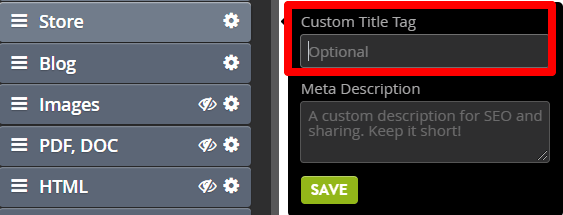
Strikingly Custom Title Tag Setting
Similar searches can require different pages. "What does bookkeeping include?" asks for an explanation. "Bookkeeping service cost" asks for pricing factors, while "bookkeeper near me" adds location. Targeting specific search questions separates these tasks. Updating content based on search trends may reveal new wording without erasing that difference in intent.
Start with language from sales calls, support messages, on-site search, and forms. Keyword tools show frequency and variants, but firsthand questions reveal context. The Strikingly guide to keyword research for SEO recommends considering relevance and intent as well as volume. Website SEO content should use volume as one signal, not as the assignment.
Write the likely answer before drafting the title. If it cannot fit into two plain sentences, the team may not understand the question yet. Targeting specific search questions becomes practical when the introduction states the situation, gives the core answer, and identifies what the page will help the reader evaluate.
Make the search snippet promise the same answer. Strikingly's guide to SEO page titles and meta descriptions explains where unique titles and descriptions appear. Targeting specific search questions should connect the title, description, opening, and main heading. Improving search-focused page structure then carries that promise through the body instead of creating a poor handoff.
Build a coverage map with explicit boundaries
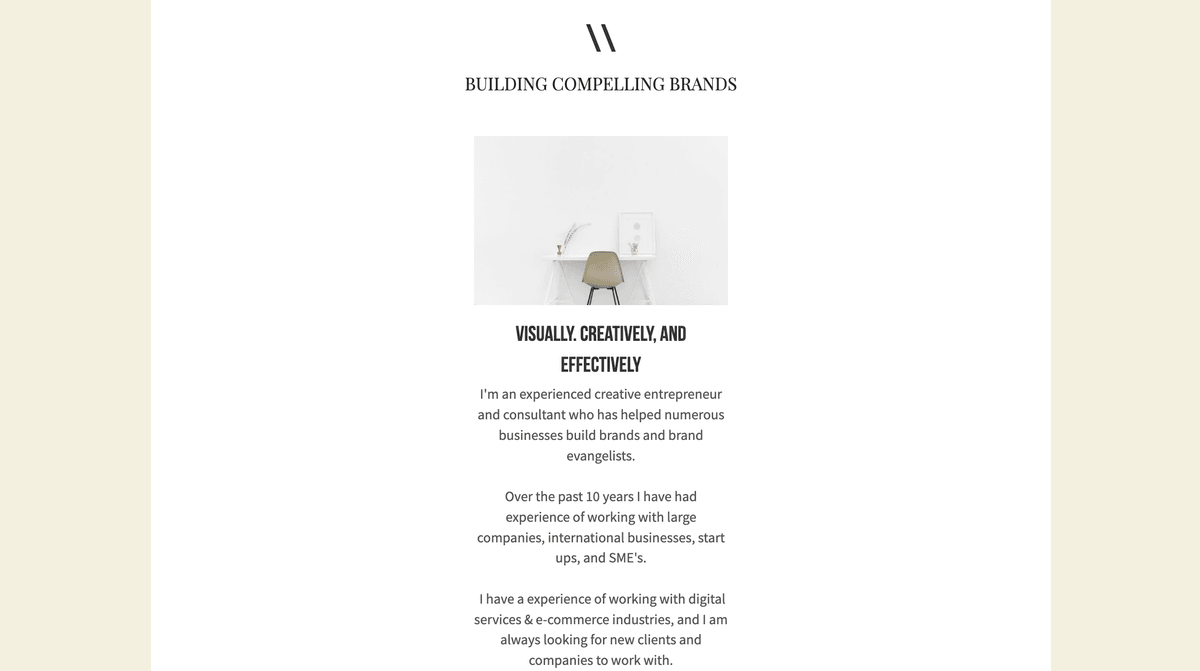
Perspective Template from Strikingly
Building comprehensive topic coverage does not mean placing every related term on one enormous page. One page answers a specific task; a connected group handles distinct tasks within the subject. A website SEO content library needs both complete local answers and clear relationships between them.
List what a reader must know before the answer is usable. A guide to commercial cleaning costs may need price factors, scope, visit frequency, site size, exclusions, quote inputs, and an example. It does not need a full guide to cleaning methods. Building comprehensive topic coverage means including required decisions and excluding tangents.
Map adjacent questions by purpose: definitions in a foundational guide, comparisons on a decision page, implementation in a tutorial, and proof in a case study. The Strikingly article on website content clusters distinguishes pillar pages, support pages, categories, and internal links. Building comprehensive topic coverage works when every page earns a distinct role.
Audit overlap before commissioning anything new. If two URLs promise the same answer to the same reader, strengthen the better page. Split an overloaded page only when its audiences require different evidence or actions. Building comprehensive topic coverage reduces duplication, while updating content based on search trends can reveal which existing page deserves the work.
Arrange the answer in the reader's working order
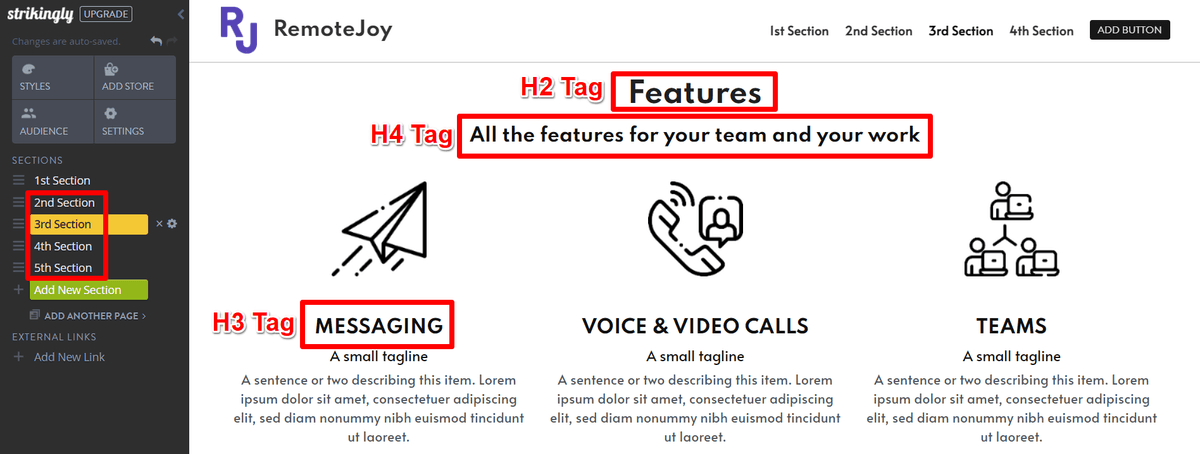
Strikingly Heading Tag Layout
Improving search-focused page structure starts with sequence, not decoration. Put the direct answer first, followed by the criteria, evidence, exceptions, and next action. Targeting specific search questions supplies that order because the reader's task determines what must appear before a decision can be made.
Headings should form a compact outline of the page's promise and progression. "Costs depend on site size and visit frequency" says more than "Pricing." Strikingly's guide to heading tags explains how H1 through H4 support understanding. Improving search-focused page structure uses those levels to show meaning. Updating content based on search trends may change a heading only when the underlying question has shifted.
Use paragraphs for explanation, lists for parallel choices, and tables only for genuine comparison. Place examples after difficult claims and qualifications beside the advice they limit. Improving search-focused page structure also requires descriptive internal links. Building comprehensive topic coverage becomes navigable when "compare service packages" replaces an ambiguous "learn more."
Check the page on a phone. Long headings, dense openings, wide tables, and misplaced actions can hide the answer. Website SEO content must remain understandable in narrow space. The Strikingly article on website content hierarchy offers a scan-based review for order and emphasis. Building comprehensive topic coverage fails when useful detail becomes physically difficult to find.
Draft for completeness before polishing for search

Strikingly Blog Editor
Write the useful answer first, then review how search language appears. This order protects readability. Website SEO content can use the main phrase in the title, opening, a relevant heading, body explanation, and snippet without repeating it in every paragraph. Exact wording belongs where it sounds natural; close variants and plain synonyms can carry the idea elsewhere.
The Strikingly Help Center guide to optimizing blog posts for search engines emphasizes valuable, relevant, readable, media-rich, and semantically complete material. That standard measures completeness by whether readers can use the answer. Updating content based on search trends should preserve that utility rather than chase new phrases.
Use the editor to strengthen meaning. Add a subheading when the task changes, a list for parallel conditions, and an image when it explains a process. Improving search-focused page structure is visible in these choices. Updating content based on search trends may change one section, but it should not disturb a sequence that still works.
Use trends as review signals, not rewrite orders
Updating content based on search trends should begin with diagnosis. A rising query may reveal new language, a changed decision, a seasonal need, or a missing subtopic. A falling query may reflect weaker demand, stronger competition, a title mismatch, outdated information, or indexing trouble. Targeting specific search questions requires identifying which explanation fits.
Compare query changes with page behavior and business evidence. Search Console reveals impressions, clicks, positions, and variants; Strikingly Built-in Analytics adds page and source context. Targeting specific search questions becomes more reliable when support questions, sales conversations, and customer vocabulary confirm the same shift.
Choose the smallest justified update. Revise a title when its promise no longer matches the question, add a section for a new decision criterion, replace a dated statistic, or merge URLs competing for one task. Updating content based on search trends should improve the answer, not merely insert a rising phrase. Improving search-focused page structure may instead require moving an existing answer earlier.
Record the reason, baseline, change, and review date. Avoid changing several high-impact elements at once unless the page is factually wrong. Website SEO content needs enough stability for a team to learn from revisions. The guide to refreshing website content also recommends preserving useful material while correcting facts, adding evidence, and improving connections.
Score the answer before publishing or refreshing
Use five checks, marking each pass, repair, or investigate:
- Question fit: Targeting specific search questions is visible in the title, opening answer, evidence, and next step.
- Coverage: Building comprehensive topic coverage includes every decision required for this task without absorbing unrelated pages.
- Structure: Improving search-focused page structure lets a mobile reader scan the sequence and locate detail quickly.
- Freshness: Updating content based on search trends is supported by query evidence and at least one contextual signal. Updating content based on search trends also requires a recorded reason and review date.
- Connection: Website SEO content links to useful proof and related decisions; improving search-focused page structure makes each destination predictable.
After publication, verify discovery. Strikingly's instructions for Google Search Console and sitemap submission cover connection and resubmission. The guide to custom blog URLs explains permalink settings. Improving search-focused page structure and updating content based on search trends should preserve an established URL when it still represents the same answer.
Maintain the answer, not the keyword inventory
Strong website SEO content begins with a real question and remains accountable to the person asking it. Targeting specific search questions gives the page a job. Building comprehensive topic coverage gives the answer enough depth. Improving search-focused page structure makes that depth usable, and updating content based on search trends keeps evidence and language current.
Choose one page with meaningful impressions and write its query brief. Mark what belongs there, what belongs elsewhere, what evidence is missing, and which change can be reviewed later. That discipline produces better website SEO content than adding phrases to a page whose purpose is unclear.
