Website Conversion Opportunities Often Hide in the Pages Visitors Already Trust
Website Conversion Opportunities Often Hide in the Pages Visitors Already Trust

Most businesses look for growth by asking for more traffic. That can help, but it is rarely the first place to look. Website conversion opportunities often appear on pages that already receive attention: a service page people read but never act on, a blog article that answers questions but does not offer a next step, or a product page that earns interest but loses confidence before checkout.
The work begins by treating the website as a set of unfinished conversations. Identifying underperforming website sections shows where visitors pause or leave. Improving high-intent visitor pathways helps ready visitors continue without guessing. Strengthening conversion points across pages makes each important action easier to recognize. Turning informational traffic into leads gives educational content a practical bridge from learning to contact, signup, purchase, or booking.
Look for the unfinished action behind the pageview

Carla Knits Template from Strikingly
A pageview is not a conversion opportunity by itself. Website conversion opportunities appear when a visitor shows enough interest to deserve a clearer next action. The Strikingly guide to driving website conversions points toward the same practical theme: conversion depends on clarity, trust, relevance, and the path a visitor can follow.
Start with three page groups. First, review pages with meaningful traffic but low action. Second, review decision pages that visitors reach from campaigns, navigation, search, or email. Third, review educational pages that attract the right audience but end without a next step. Identifying underperforming website sections inside these groups is more useful than scanning every page equally, because the review begins where visitor attention already exists.
A useful opportunity queue
- Find one page where visitors arrive with visible intent but do not continue.
- Mark the exact section where attention weakens or the next step becomes unclear.
- Decide whether the fix is copy, proof, layout, navigation, form design, or offer relevance.
- Connect the page to one measurable action before changing several elements at once.
Use Strikingly built-in analytics or Google Analytics with Strikingly to compare page activity, traffic sources, and behavior over time. Website conversion opportunities become easier to defend when the evidence includes both the page's role and the visitor's likely intent.
A simple opportunity brief can keep the review grounded: Website conversion opportunities should name the page, the audience, the stalled action, and the evidence. Identifying underperforming website sections gives the brief a location. Improving high-intent visitor pathways gives it a route. Strengthening conversion points across pages gives it a fix, while turning informational traffic into leads gives educational pages a measurable purpose.
Fix weak sections before rebuilding the whole page

Beauty INU Template from Strikingly
Identifying underperforming website sections should produce a precise diagnosis. A weak section may have a vague heading, a buried CTA, a claim without proof, a confusing comparison, or a form that asks for too much too soon. Rebuilding the whole page can hide the real problem. A smaller repair keeps the test readable and protects useful parts of the page.
Read the page from the visitor's perspective. If the first screen promises help, the next section should explain the value. If the page presents a service, the proof should appear before doubt grows. If the page asks for contact details, the visitor should know what happens after submission. Identifying underperforming website sections is not about blaming design; it is about finding the moment where the page stops helping.
The Strikingly online conversion improvement article is useful here because it frames conversion as confidence-building. Apply that idea section by section. Identifying underperforming website sections may show that a testimonial belongs higher, that pricing guidance needs context, or that a product benefit needs a visual example.
When a section is weak, write the issue as visitor evidence. Identifying underperforming website sections might reveal that people reach a package comparison but never open the inquiry form. Improving high-intent visitor pathways may require a clearer route from that comparison to a quote. Strengthening conversion points across pages keeps the action consistent, and turning informational traffic into leads can capture visitors who still need more context.
Make ready visitors feel recognized

Dog Salon Template from Strikingly
Improving high-intent visitor pathways starts with recognizing the visitor who is already close to action. This person may be comparing packages, checking availability, reading reviews, confirming delivery details, or returning from a campaign. They should not be forced back through broad introductory content when they need a confident next step.
Map the path from high-intent pages to action pages. A pricing section should lead to a quote, checkout, consultation, or comparison. A product collection should make category movement and product selection easy. A service page should lead to a focused inquiry. Use custom forms, Site Search, and multiple pages when improving high-intent visitor pathways requires a clearer route instead of one crowded page.
Do not assume every CTA should ask for the biggest commitment. Improving high-intent visitor pathways may mean offering a quote request for service buyers, a product comparison for shoppers, or a booking form for visitors who already know what they want. Website conversion opportunities grow when the next action matches the stage of intent.
Make every conversion point earn its place
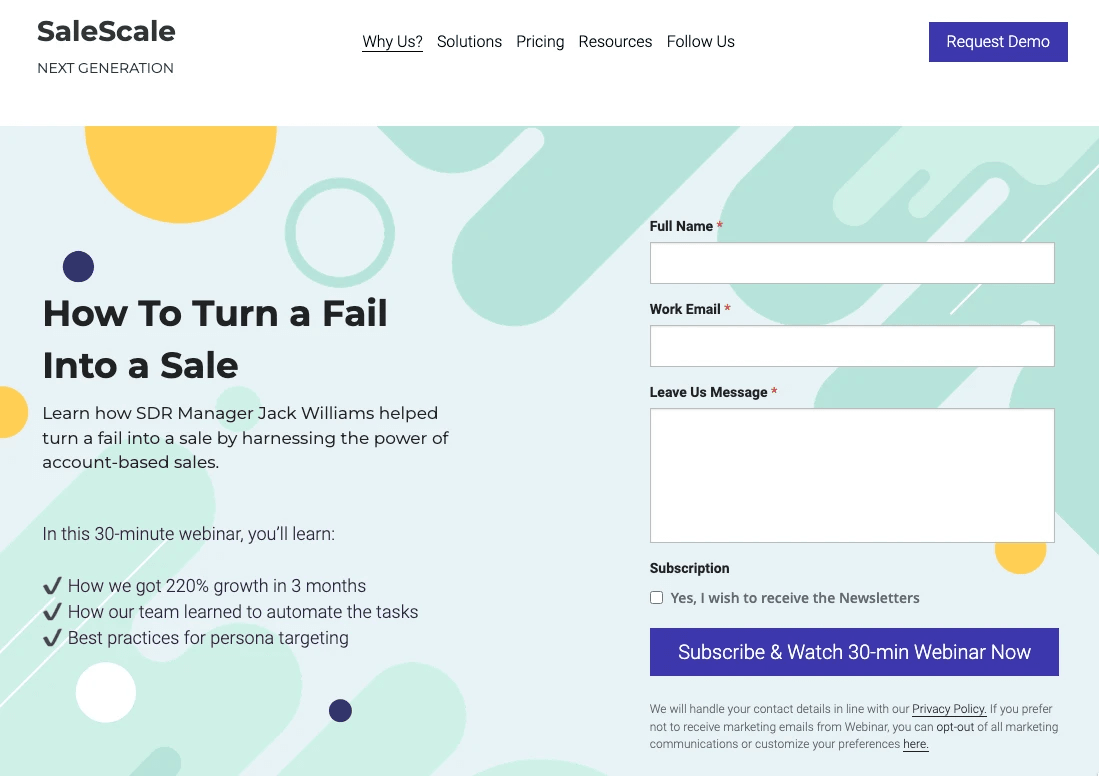
SaleScale Template from Strikingly
Strengthening conversion points across pages means checking the action itself, not only the traffic around it. A button, form, chat prompt, product review, newsletter signup, or booking link should appear where it answers a real question. If the page asks for action before value is clear, visitors hesitate. If the page waits too long, motivated visitors drift away.
Use Product Reviews near shopper hesitation, Live Chat where visitors need help before deciding, and Simple Blog links where educational content can support a decision. Strengthening conversion points across pages is strongest when the CTA feels like the natural response to the section above it.
Check consistency across the site. If the homepage says "Book a consultation," the service page should not switch to "Submit" without context. If a blog article invites a download, the resource page should use the same promise. Strengthening conversion points across pages prevents visitors from wondering whether they are still following the same offer.
Turn learning moments into lead moments
Turning informational traffic into leads works only when the next step respects the reason people came to learn. A reader who arrives from search may not be ready to buy, but they may want a checklist, comparison, template, webinar, or practical follow-up. Website conversion opportunities from informational pages depend on relevance, not pressure.
Group educational pages by reader intent. Early-stage articles can invite newsletter subscriptions or related guides. Comparison articles can link to service pages or product collections. How-to content can offer a worksheet, quote request, or support path. Use blog categories to organize related resources and Newsletters when turning informational traffic into leads depends on ongoing education.
The offer should continue the article, not interrupt it. Turning informational traffic into leads might mean placing a relevant form after a useful explanation, linking a service page after a checklist, or offering a downloadable resource at the end of a guide. Improving high-intent visitor pathways and turning informational traffic into leads can work together when readers are given a choice between learning more and taking action now.
For content teams, identifying underperforming website sections should include the article ending, not only the top of the page. Improving high-intent visitor pathways may involve a resource hub or comparison page. Strengthening conversion points across pages keeps the handoff familiar, while turning informational traffic into leads gives readers a helpful reason to stay connected.
Use a short review cycle for the best opportunity
Website conversion opportunities become manageable when the team reviews one path at a time. Choose a page with existing attention, name the expected action, and identify the section or handoff that may be weakening momentum. Then make one visible improvement and set a review date. Identifying underperforming website sections should lead to a change that can be checked, not a long list nobody owns.
Before publishing the change, ask whether the page now helps three visitor types: the scanner who needs instant clarity, the comparer who needs proof, and the ready visitor who needs action. Improving high-intent visitor pathways should make the third visitor's route unmistakable. Strengthening conversion points across pages should make the offer language consistent. Turning informational traffic into leads should give learners a next step without pretending they are already buyers.
Use a monthly conversion opportunity note. Record the page, the signal, the likely cause, the change, and the metric to review. Website conversion opportunities should be judged by whether the repair improves real movement: more qualified inquiries, more product exploration, more bookings, more downloads, or more relevant newsletter signups. Strengthening conversion points across pages becomes a habit when each review leaves the site easier to act on than it was before.
The best website conversion opportunities are usually not hidden in complicated tools. They are visible in moments when interested visitors need the page to answer one more question, reduce one doubt, or present one cleaner next step. Keep identifying underperforming website sections, keep improving high-intent visitor pathways, keep strengthening conversion points across pages, and keep turning informational traffic into leads where the reader's intent supports it. These website conversion opportunities turn existing attention into better business outcomes.
