Online Retail Marketing Turns Seasonal Interest Into Purchases
Online Retail Marketing Turns Seasonal Interest Into Purchases
A retail campaign is not finished when a banner goes live. Shoppers still need to recognize the offer, find suitable products, understand why those products fit the moment, and complete a purchase without losing the campaign context. Online retail marketing coordinates that entire route instead of treating advertisements, store pages, and reporting as separate projects.
The practical work includes promoting seasonal product collections with a clear reason to buy, creating targeted promotional landing pages that continue the promise made in an advertisement, and supporting product discovery through content that answers real shopping questions. Measuring campaign-driven purchases then reveals which combinations helped customers decide, rather than merely showing which channel produced the most clicks.
Write the retail campaign brief before building assets
Strong online retail marketing begins with one shared brief. Without it, advertisements, emails, and destination pages may emphasize different benefits. A short brief gives merchandising, content, design, and measurement teams the same definition of success.
A seven-part campaign brief
- Customer moment: Name the event, need, deadline, or seasonal change affecting the purchase.
- Audience: Describe who is likely to care and what they already know.
- Collection: Choose the products that solve the need and can actually be fulfilled.
- Promise: State one benefit that every promotional placement will continue.
- Destination: Creating targeted promotional landing pages starts with choosing where shoppers can evaluate the offer.
- Discovery support: Supporting product discovery through content requires a useful guide, comparison, or example.
- Evidence: Measuring campaign-driven purchases requires a defined order, revenue, margin, or repeat outcome.
This online retail marketing brief keeps promoting seasonal product collections connected to inventory and customer need. It also keeps creating targeted promotional landing pages from becoming a design exercise. For a broader planning reference, Strikingly's guide to strategic seasonal promotions explains why timing and audience relevance should shape the offer.
Promoting seasonal product collections around a shopping job
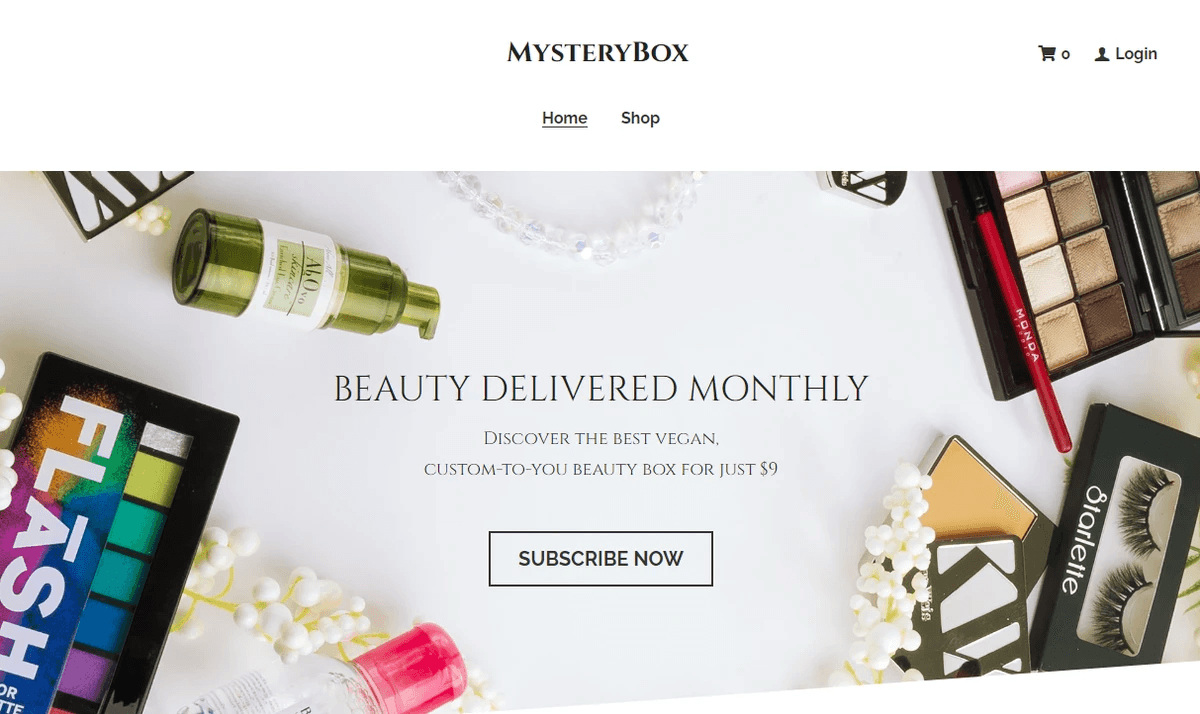
MysteryBox Retail Store Template from Strikingly
A season is useful only when it changes what a shopper needs. “Summer picks” is vague; “carry-on essentials for a three-day beach trip” gives the collection a job. Promoting seasonal product collections works better when the group saves time, resolves compatibility questions, or helps someone meet a deadline. Online retail marketing should make that practical logic visible in the collection name and opening copy.
Start with availability, margin, delivery windows, and return constraints. A nearly unavailable hero product may attract attention but frustrate buyers. The Simple Store product categorization guide explains product groups, while Product Showcase supports deliberate presentation. Promoting seasonal product collections should never outrun fulfillment.
Give the assortment one rule: a product belongs only if it supports the seasonal job. That makes promoting seasonal product collections coherent across the homepage, newsletter, and product cards. Use sale prices or a store coupon only when the economics support a genuine offer. Broad discounting can obscure the best answer to the customer's need.
Creating targeted promotional landing pages with one promise
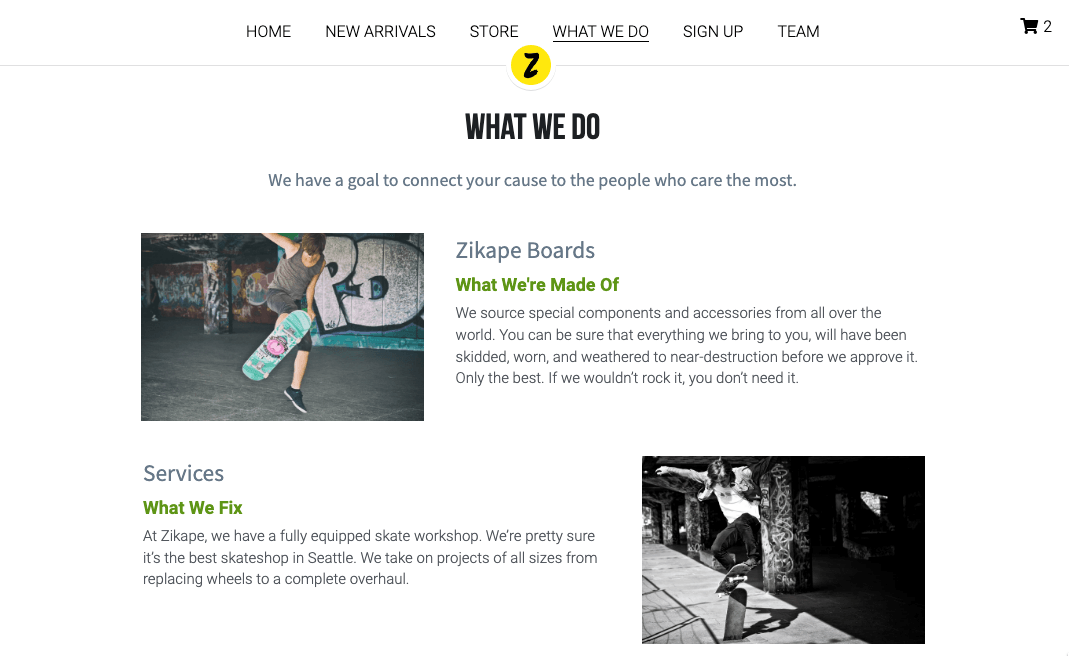
Perspective Retail Store Template from Strikingly
Creating targeted promotional landing pages means continuing the reason a person clicked. If an advertisement promises gifts under a certain price, the page should open with that same threshold and the qualifying products. If an email promises early access, the destination should explain eligibility and timing immediately. Message continuity is a basic form of reassurance.
A focused destination needs the promise, key products, availability details, proof, and one clear route to purchase. It does not need every main-store navigation choice. Strikingly's coherent website promotional strategy connects messages with destinations, while its holiday traffic guide covers mobile readiness and ecommerce preparation.
Creating targeted promotional landing pages also requires source-specific judgment. Paid search visitors may need a direct category comparison. Social visitors may need more context before seeing products. Existing subscribers may respond to a familiar collection and a concise reminder. Online retail marketing can reuse the same core offer while changing the amount of explanation for each arrival.
Pre-launch check: On a phone, compare the advertisement and destination. Confirm that the offer, products, terms, deadline, and action agree.
That check makes creating targeted promotional landing pages operational, not cosmetic. Test product links, coupon behavior, stock messages, and the path back to the collection. Because creating targeted promotional landing pages continues after launch, assign an owner to update availability and shipping deadlines.
Supporting product discovery through content that acts like assistance

Massage Therapist Template from Strikingly
Supporting product discovery through content matters when shoppers cannot select by appearance alone. A gift guide can organize by recipient, a comparison can explain tradeoffs, and a sizing article can prevent a poor fit. Each format should reduce a specific decision burden.
Content should lead into the catalog when a reader is ready. Link a care guide to relevant materials, a recipe to its tools, and a travel checklist to its collection. Strikingly's guide to content marketing for ecommerce connects useful material with visibility and sales. Supporting product discovery through content is merchandising, not a publishing quota.
Keep the recommendation transparent. Explain why an item fits, which buyer it suits, and where its limitations matter. Online retail marketing loses credibility when every article declares every product perfect. Supporting product discovery through content should help someone rule an item in or out with confidence.
Make the library easy to explore. Site Search can help visitors locate a known topic, and Product Filter helps narrow a larger catalog. Supporting product discovery through content works best when articles, collections, filters, and product pages use the same customer language.
Update strong resources when a season returns. Replace unavailable items, revise delivery dates, and add questions learned from support conversations. This makes supporting product discovery through content more efficient over time. It also gives promoting seasonal product collections a useful entry point that already has context and search history.
Carry the campaign promise through checkout
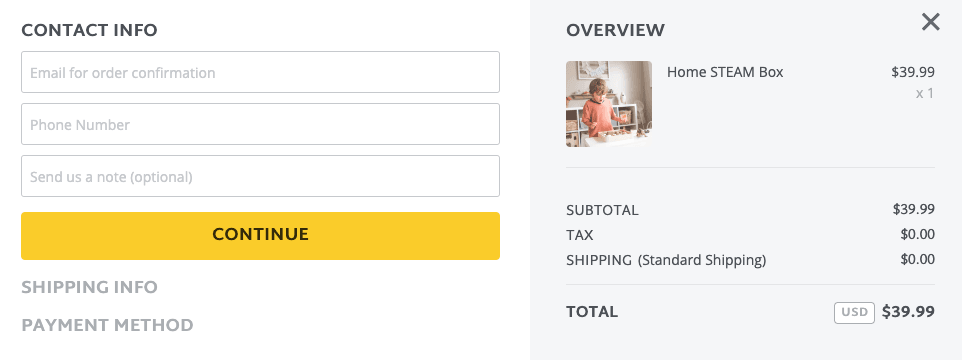
Sparks Retail Store Template Checkout Window
A campaign can create desire and still lose the sale during the final steps. Check that the cart preserves the correct price, coupon, product variant, and delivery expectation. Creating targeted promotional landing pages has little value when their terms disappear at checkout. The final screen should feel like a continuation of the offer, not a new negotiation.
Show shipping costs and timing before they become a surprise. Keep mobile fields readable. Concise policies and credible reviews can provide reassurance; Strikingly's Product Reviews guide explains feedback in a Simple Store. Online retail marketing should reduce uncertainty where commitment is highest.
Run one complete test purchase before launch and repeat it after major offer changes. That test protects promoting seasonal product collections from configuration errors and gives the team a reliable starting point for measuring campaign-driven purchases. Record the device, source link, applied discount, order confirmation, and analytics event so problems can be reproduced.
Measuring campaign-driven purchases across the complete route
Measuring campaign-driven purchases starts with a consistent campaign name. Use it across tagged links, landing-page records, coupon labels, and internal reporting. A clean naming convention lets online retail marketing compare channels without combining unrelated promotions or splitting one campaign into several labels.
Review purchases alongside sessions, product views, cart additions, conversion rate, revenue, average order value, discounts, refunds, and margin. Measuring campaign-driven purchases solely by last-click revenue can undervalue discovery content and overvalue the final reminder. Compare assisted paths when the available tools support them, and state clearly what the report can and cannot attribute.
Strikingly's built-in analytics can show traffic and site activity, while the Google Analytics 4 connection supports deeper event and campaign analysis. Measuring campaign-driven purchases should use a defined attribution window, a pre-campaign baseline, and the same refund treatment for every channel.
When measuring campaign-driven purchases, segment results before drawing conclusions. New and returning customers may respond differently. Mobile traffic may discover products but complete purchases later on desktop. One collection may generate fewer orders but better margins. Measuring campaign-driven purchases becomes useful when those differences change a decision about budget, assortment, or page design.
Close the campaign with a learning record
Within a week of the campaign ending, gather the brief, final assets, availability changes, customer questions, and performance report. Ask where shoppers entered, which products they explored, what content they used, and where purchases stopped. This turns online retail marketing into a repeatable system rather than a sequence of disconnected launches.
Review promoting seasonal product collections against sell-through and fulfillment quality, not attention alone. Review creating targeted promotional landing pages against qualified visits and purchase completion, not visual preference. Review supporting product discovery through content against movement into relevant product pages. Review measuring campaign-driven purchases against the decisions the evidence actually supports.
Keep the parts that earned their place. A successful guide can be refreshed, a useful landing-page layout can be adapted, and a strong collection rule can shape the next assortment. Measuring campaign-driven purchases should also identify what not to repeat, including discounts that reduced margin, channels that attracted poor-fit traffic, or products that created avoidable support work.
The next campaign can start small: choose one customer moment, assemble a tightly reasoned collection, build one matching destination, and publish one genuinely helpful buying resource. Promoting seasonal product collections, creating targeted promotional landing pages, and supporting product discovery through content then become coordinated choices. That is the foundation of online retail marketing that produces purchases the business can understand and improve.
