Local Website Marketing Should Make Nearby Service Easy to Verify
Local Website Marketing Should Make Nearby Service Easy to Verify

A person searching for a nearby service does not need a city name repeated across a page. They need to know whether the business covers their address, understands local conditions, has helped someone in a comparable situation, and can respond. Local website marketing should make those facts easy to verify.
That journey combines four kinds of work. Creating pages around service locations establishes where the offer applies. Highlighting nearby customer experiences provides grounded proof. Improving local search relevance helps the right page surface, while connecting website visitors with local services turns that relevance into a practical next step.
The four questions behind a local decision
- Coverage: Does this business genuinely serve my address, and are any travel or appointment limits clear?
- Fit: Does the page describe the service I need under conditions that resemble mine?
- Proof: Can I inspect a specific, permissioned result from this area or branch?
- Action: Can I call, book, visit, or inquire without repeating information the page already knows?
Use these questions as a page test rather than a slogan. The Strikingly article on a local service website that proves nearby capability similarly connects coverage, contact details, local reviews, and accessible appointment requests.
Improving local search relevance starts with a locally useful page

Le Petit Bouquet Template from Strikingly
Imagine a customer who needs a same-week repair in one neighborhood. The search result should lead to a page that names the real service, covered place, important constraint, and next action. Improving local search relevance begins with accurately matching that need, not adding every nearby town to generic copy.
Creating pages around service locations makes sense when place changes something useful: the available team, service schedule, regulations, travel time, property type, pricing condition, language, pickup point, or customer examples. If none of those differ, one strong service-area page may be clearer than many near-identical city pages.
For creating pages around service locations, define a distinct purpose before creating a URL. Record the audience, offered service, true boundary, local consideration, proof, owner, and action. Strikingly's guide to multi-page sites explains how separate pages receive their own paths and remain manageable within one site.
Creating pages around service locations should never mean swapping only the place name. Give each page a unique introduction, useful coverage details, relevant service information, a local example, and a contact route. The Strikingly article about service marketing with local proof recommends creating a page only when location changes the story.
Assign each location page an operational owner and a review date. Local website marketing needs someone to confirm coverage, hours, prices, staff, proof, and routing when conditions change. Creating pages around service locations creates a maintenance obligation, while improving local search relevance depends on keeping that information current. Local website marketing should retire or consolidate a page when the business can no longer support its promise.
Use the actual service and place in the title, visible heading, description, and copy where it reads naturally. Improving local search relevance also depends on a clear URL, substantial information, internal links, and consistent business details. The official guide to SEO page titles and descriptions supports unique, descriptive fields for individual pages.
Creating pages around service locations must reflect real differences
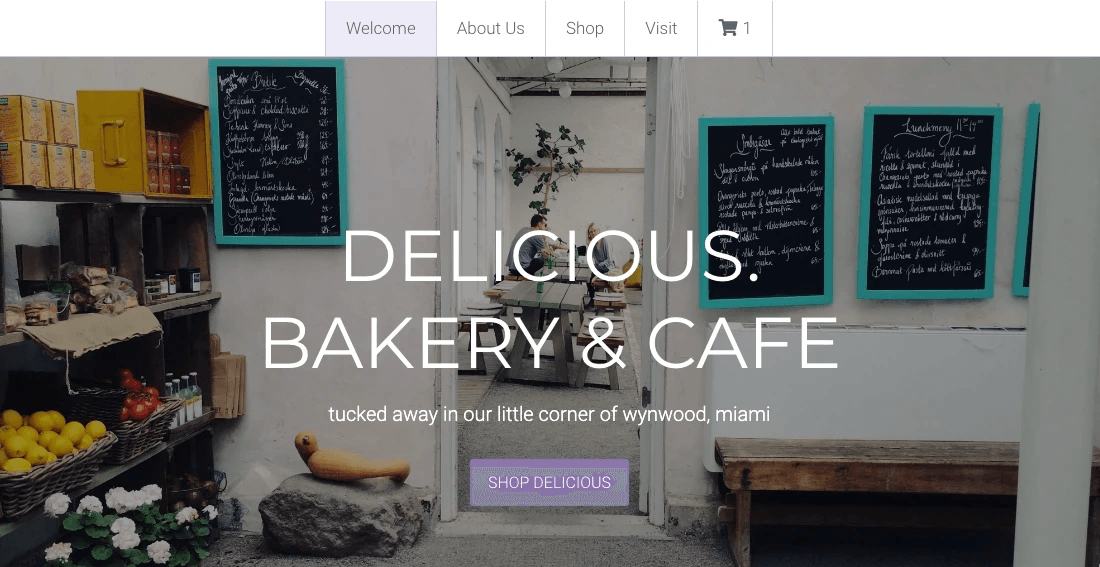
Minimal Store Template from Strikingly
Once the visitor arrives, local website marketing must answer operational questions. State neighborhoods, postcodes, radius, travel fees, minimum project size, opening hours, emergency limits, appointment lead time, or pickup rules when relevant. Honest boundaries prevent unsuitable inquiries and make the page more useful.
Improving local search relevance comes from this substance. A page about coastal maintenance can explain salt exposure; an urban delivery page can explain parking and access; a regional consultant can describe applicable rules. Improving local search relevance does not require invented landmarks or claims of local familiarity the team cannot support.
Connect each local page to the main service page, relevant customer work, FAQs, and a suitable contact route. Creating pages around service locations should strengthen the site's information structure rather than produce isolated entry pages.
Keep names, addresses, phone numbers, hours, and service boundaries consistent across the site and active public profiles. Improving local search relevance becomes harder when one page lists old hours or a branch that no longer accepts visits. Maintain one approved record and assign someone to update every location-dependent field.
Creating pages around service locations also requires restraint during expansion. Add a page after the operation can fulfill the promise, collect appropriate proof, route inquiries, and maintain details. Local website marketing loses credibility when its map grows faster than its real coverage.
Highlighting nearby customer experiences should resolve a recognizable concern

Nail Bar Template from Strikingly
Highlighting nearby customer experiences works when the reader can understand the setting, need, work, and result. A stronger example might explain how a team handled access in a known building type, met a seasonal deadline, or adapted a service to a regional condition.
Ask permission for the quotation, images, location detail, and outcome. Highlighting nearby customer experiences does not require publishing a home address or sensitive project information. A neighborhood, branch, broad area, or anonymized condition may provide enough context while respecting the customer.
Place proof beside the claim it supports. Highlighting nearby customer experiences about response time belongs near availability; a review about cleanliness belongs near the process; a project outcome belongs near the relevant service. Strikingly's guide to verifiable website testimonials emphasizes context, understandable outcomes, attribution, and permission.
Highlighting nearby customer experiences should represent more than one unusually successful project over time. Include different service types, constraints, and realistic outcomes. State when a result depended on customer preparation, site conditions, or a particular package so the example informs rather than overpromises.
Use local questions to guide future proof. If callers repeatedly ask whether the team handles apartment access, rural travel, weekend work, or a specific regulation, document an approved example. Highlighting nearby customer experiences then reduces uncertainty before the inquiry and helps staff answer consistently.
Maintain a small evidence record for every published example: customer permission, approved wording, location precision, service delivered, result source, date, and review owner. Highlighting nearby customer experiences stays credible when claims can be traced and updated. This record also helps creating pages around service locations use the right example instead of copying one testimonial everywhere. Local website marketing benefits when proof remains specific without exposing private details.
Connecting website visitors with local services requires a workable action
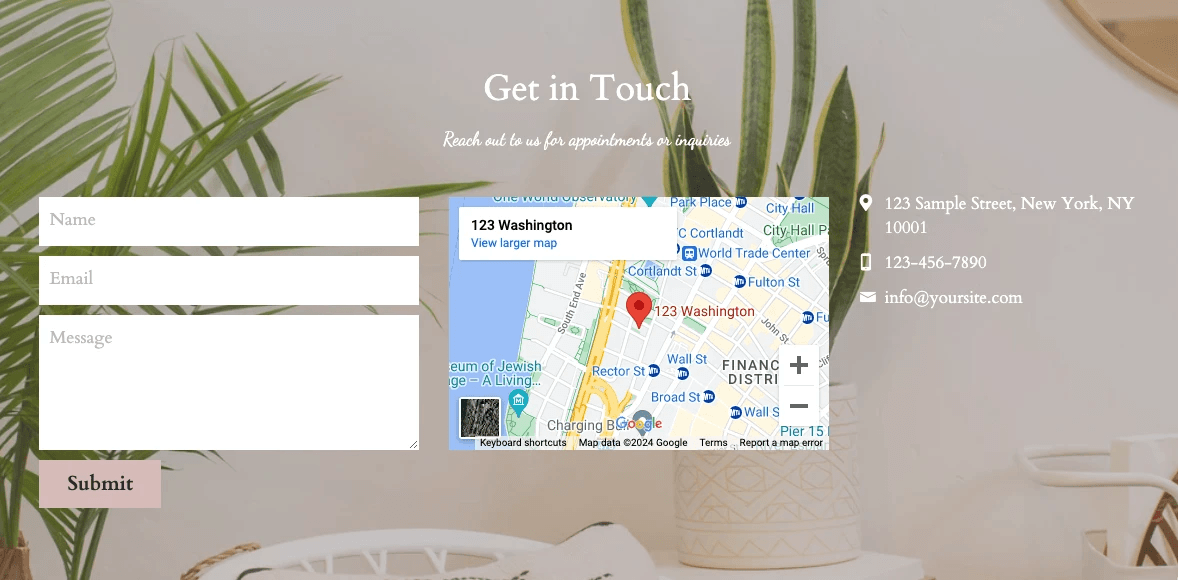
Strikingly Website with Google Map
A map pin is useful only when it answers a practical question. It may show a customer-facing office, pickup point, event venue, standard coverage area, or route. Connecting website visitors with local services requires written boundaries too, because a pin alone cannot explain radius, travel fees, accessibility, or mobile service.
Use the Strikingly Google Map integration when a map helps orientation, and pair it with a text address or service-area list. Local website marketing should not turn an administrative office into an implied storefront.
Connecting website visitors with local services also means offering the right channel. A phone link may suit an urgent repair, booking may suit appointments, a form may suit scoped work, and directions may suit a shop. Strikingly explains how to link phone and email details, including click-to-call on supported devices.
Keep the action proportional. Connecting website visitors with local services should not require a long form to ask whether a postcode is covered. Use a standard contact form for a simple message and a Custom Form only when location, service type, timing, or another detail changes the first response.
Explain who responds, when, and what happens next. Connecting website visitors with local services includes the confirmation state and internal routing, not only the button. Preserve the originating location page in the inquiry record so the appropriate branch or team receives the context.
Test routing with one submission from every active location page. Local website marketing should verify the recipient, source label, customer confirmation, response target, and fallback owner. Connecting website visitors with local services fails when a correct form reaches an unmonitored inbox. Connecting website visitors with local services also requires a documented handoff when the first team cannot fulfill the request.
Test local website marketing from the customer's postcode
Discover: Search for one genuine service-and-place need and open the most appropriate page.
Verify: Confirm coverage, service fit, one nearby example, current details, and any important limitation.
Act: Call, book, request directions, or submit the shortest suitable inquiry on a phone.
Receive: Check confirmation, notification, source page, location routing, and promised response time.
This field check shows whether local website marketing works as an operation. Improving local search relevance is useful only when the surfaced page is accurate. Highlighting nearby customer experiences matters only when the proof fits the claim. Connecting website visitors with local services succeeds only when the request reaches someone prepared to respond.
Review results by location and page purpose. Use Strikingly's built-in analytics for page and source patterns, then compare inquiries with actual serviceability and customer outcomes. Improving local search relevance should produce more appropriate local visits, not merely more impressions.
Start with one service and one genuine area. Local website marketing can then improve the page using real questions, permissioned proof, and inquiry outcomes. Creating pages around service locations should follow operational differences. Highlighting nearby customer experiences should follow verified work. Connecting website visitors with local services should remain easy, honest, and owned by a real team.
