Digital Brand Awareness Grows From Signals People Can Remember
Digital Brand Awareness Grows From Signals People Can Remember

People rarely remember a business because they saw one advertisement. They remember a useful idea, a repeated point of view, a distinctive visual cue, or a name that appeared in several relevant places. Digital brand awareness grows when those signals reinforce one another instead of competing for attention.
That requires more than publishing frequently. Expanding reach through useful content gives audiences a reason to notice the brand. Creating recognizable campaign assets helps them identify it again. Strengthening visibility across channels repeats the same promise in appropriate formats, while measuring branded search growth reveals whether people later seek the business by name.
Choose the memory before choosing the channel

Brand Coach Template from Strikingly
Begin by writing one sentence that a suitable customer should remember after encountering the brand. It might describe the audience served, the problem solved, the method used, or the belief that shapes the work. If the sentence changes every campaign, digital brand awareness becomes a collection of disconnected impressions.
Reduce the sentence to a small signal set: one central promise, three supporting topics, a consistent voice, and a few visual cues. This does not require identical layouts everywhere. It requires enough continuity that a social post, article, landing page, and email feel like parts of the same business. Strikingly's guide to digital brand positioning explains why recognition depends on controlled differences rather than decoration alone.
A practical brand-signal map
- Memory: name the useful idea the audience should associate with the brand.
- Evidence: choose examples, results, explanations, and stories that prove that idea.
- Recognition: repeat stable language, typography, color, and image direction.
- Distribution: adapt each message to the channel without changing its promise.
- Recall: measure whether more people return directly or search for the brand.
Use the map to review every campaign brief. Creating recognizable campaign assets belongs in the recognition layer, but the asset must still carry evidence and a useful message. Expanding reach through useful content belongs in distribution, yet the content should strengthen memory rather than chase unrelated traffic. The map keeps digital brand awareness tied to what people actually retain. Digital brand awareness is clearer when creating recognizable campaign assets follows a documented signal set instead of individual design preference.
Earn a second encounter by expanding reach through useful content

Professional Website Templates Page from Strikingly
Useful content answers a real question while revealing how the brand thinks. A practical guide, original checklist, comparison, case example, or short research summary can reach people before they are ready to buy. Expanding reach through useful content works because the audience receives value before being asked for attention. Expanding reach through useful content supports digital brand awareness because useful ideas give later visual recognition something meaningful to retrieve.
Build three or four topic lanes around recurring customer needs. Each lane should support the central brand promise from a different angle. Use a Strikingly blog as the home for durable articles and blog categories to keep related resources discoverable. Digital brand awareness improves when someone can encounter several consistent, genuinely helpful ideas rather than one isolated post.
Plan every article with one primary audience question, one original contribution, and one destination. Expanding reach through useful content is not achieved by rewriting popular advice without experience or evidence. Add a process detail, decision criterion, customer pattern, or field example that another source could not easily provide. That specificity makes the brand easier to cite and remember.
Give strong resources more than one useful life. An article can become a short email lesson, a visual summary, a discussion prompt, or a presentation slide, provided the adapted version still helps on its own. Expanding reach through useful content should increase meaningful access to the idea, not flood channels with links that add no context.
Keep creating recognizable campaign assets after adaptation

Consulting Template from Strikingly
Creating recognizable campaign assets begins with a reusable system, not a stack of identical graphics. Define a stable headline style, logo treatment, color relationship, image approach, and message hierarchy. Then create channel-specific sizes without changing the idea people are meant to recognize. Creating recognizable campaign assets supports strengthening visibility across channels only when every format preserves that hierarchy.
The website should provide the reference point for that system. Use consistent site and page titles, navigation language, button tone, and visual treatment. Strikingly's SEO titles and meta descriptions guide helps align search presentation with page content, while a custom domain gives the brand a stable address. Creating recognizable campaign assets includes these less decorative cues because they appear in search results and shared links.
Create a small asset kit for each campaign: one landing-page header, one social format, one email visual, one short text version, and one proof element. Creating recognizable campaign assets becomes easier when every item inherits the same source message. It also prevents a late channel request from producing a completely different campaign.
Test recognition without the logo. Show a few assets to someone familiar with the business and ask what company, promise, or topic comes to mind. If recognition depends entirely on the logo, strengthen the language, imagery, and point of view. Digital brand awareness should survive partial attention because audiences often see assets briefly and out of sequence.
Keep strengthening visibility across channels around one destination

Strikingly Social Feeds Section
Strengthening visibility across channels does not mean maintaining every available account. Choose channels where the intended audience already looks for information, recommendations, or examples. Give each one a role: discovery, explanation, proof, conversation, or return. Strengthening visibility across channels makes expanding reach through useful content more disciplined because each resource receives a defined distribution job.
Use one campaign statement and adapt its expression. A search title should be descriptive, a social post can open with a useful observation, and an email can speak more directly to subscribers. Strengthening visibility across channels succeeds when these versions lead to the same expectation. Strikingly's guide to digital marketing website performance connects this consistency with audience intent and conversion quality.
The Social Feed section can make active social content visible on the website, while Newsletters can bring a useful resource back to subscribers. Strengthening visibility across channels requires a reason for each connection. Do not embed a feed merely to fill space or send every article to the entire list.
Keep the destination aligned with the source message. If a social post offers a checklist, the landing page should reveal that checklist immediately. If an email promises a case example, the page should not begin with a generic company introduction. Expanding reach through useful content earns the first click; strengthening visibility across channels protects recognition after it.
Start measuring branded search growth as active demand
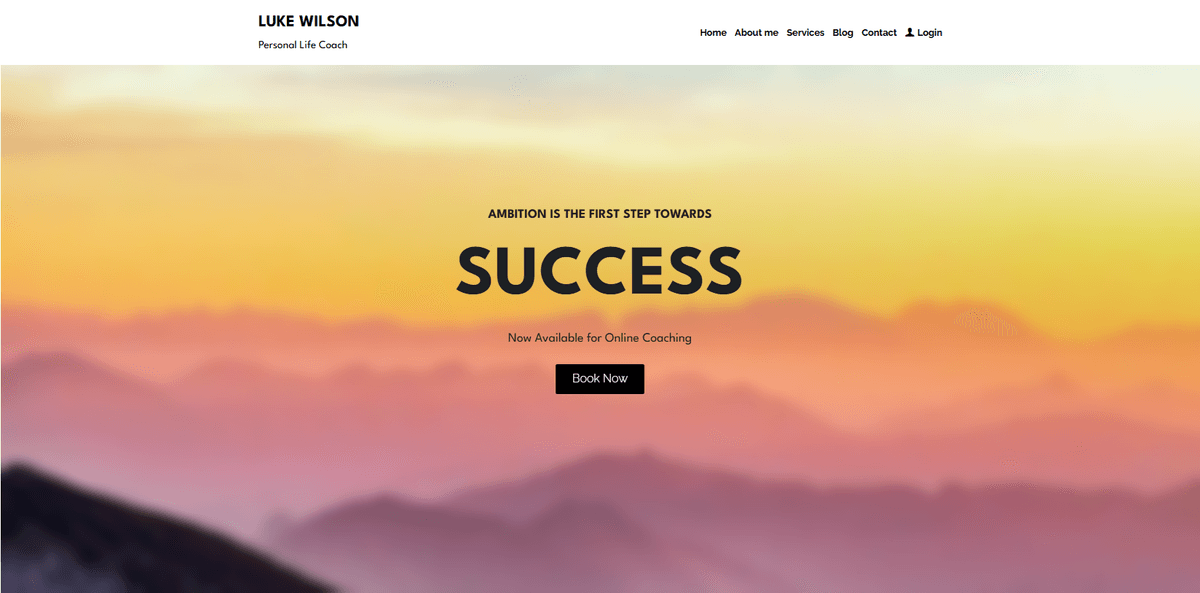
Luke Wilson Template from Strikingly
Reach and impressions show exposure, not memory. Measuring branded search growth examines whether more people search for the company name, product name, founder, or a distinctive campaign phrase. These searches suggest prior awareness, although they should be interpreted with direct traffic, returning visits, mentions, and conversions. Measuring branded search growth gives digital brand awareness a useful recall signal without pretending it measures every remembered encounter.
For measuring branded search growth, connect the site with Google Search Console, then group branded queries consistently. Record impressions, clicks, click-through rate, and the branded share of relevant search traffic each month. Measuring branded search growth requires stable spelling rules so variants, abbreviations, and product names are not counted differently from one equivalent period to the next.
Within digital brand awareness, measuring branded search growth also involves using Strikingly Built-in Analytics to review search, social, referral, and direct traffic. A rise in direct and branded search after a coordinated campaign can support the awareness hypothesis, but seasonality, publicity, and offline activity may also contribute. Measuring branded search growth is most useful as a trend supported by context, not a claim that one post caused every change.
Monthly awareness check: Compare branded search impressions, direct visits, returning visitors, campaign-assisted visits, newsletter growth, and mentions. Then note which content topic and asset system were active. The purpose is to connect memory signals with real audience behavior, not to manufacture one universal awareness score.
Review quality alongside volume. If branded searches rise but visitors leave quickly, the website may not match what campaigns taught people to expect. If recognition improves in surveys but search remains flat, the audience may return through saved links, social profiles, or email. Measuring branded search growth should guide questions, while digital brand awareness is judged across several forms of recall and return.
Repeat the signals that continue to earn attention
Every quarter, choose the content themes that produced qualified visits, the assets people recognized, and the channels that created useful onward behavior. Stop repeating elements merely because they are familiar to the team. Expanding reach through useful content depends on continued usefulness, and creating recognizable campaign assets depends on consistency that still serves the message. Measuring branded search growth can then show whether creating recognizable campaign assets and strengthening visibility across channels are building more active recall.
Digital brand awareness compounds when audiences repeatedly encounter a clear idea and can connect it to one business. Strengthening visibility across channels gives that idea more appropriate places to appear. Measuring branded search growth shows whether some of those encounters become active recall. Keep the promise stable, improve the evidence, and let each channel express the same recognizable value in its own useful form.
