Business Website Positioning Makes the Right Choice Easier to Recognize
Business Website Positioning Makes the Right Choice Easier to Recognize

A visitor should not need a sales call to understand who a business is best equipped to help. Business website positioning makes that fit visible through the audience named, the problem framed, the outcome promised, and the evidence selected. It helps the right visitor recognize a relevant choice while giving everyone else an honest basis for deciding.
The work begins with defining a clear market niche instead of claiming a whole industry. It develops through highlighting distinctive business strengths that customers can verify. Aligning website messaging with customer needs translates those strengths into useful outcomes, while strengthening competitive differentiation explains why the business is a better fit than the alternatives a buyer is already considering.
Begin by deciding who should not choose you

Perspective Store Template from Strikingly
Positioning becomes vague when everyone must feel included. List the projects, buying situations, expectations, and constraints the business is not designed to serve. A specialist may decline emergency work, while a local provider may not support nationwide delivery. Honest boundaries make Business website positioning credible.
Defining a clear market niche does not require rejecting everyone outside one demographic. It means choosing the situation where your expertise creates unusual value. The Strikingly guide to positioning a website in its market connects audience knowledge, competitor understanding, a unique proposition, and consistent communication. Those choices are more useful than a broad label such as “solutions for every business.”
The exclusion-first positioning sheet
- Best-fit situation: Name the event, pressure, or ambition that makes the offer relevant now.
- Customer priority: Choose the outcome that matters more than speed, price, convenience, or another tradeoff.
- Credible advantage: Record the process, expertise, access, or proof the business can repeatedly deliver.
- Wrong-fit signal: State the expectation that another provider would serve better.
Use the sheet as a decision, not a slogan generator. Defining a clear market niche should change which examples appear, which services receive emphasis, and which inquiries the site encourages. Business website positioning is working when the preferred customer recognizes familiar pressures and the wrong-fit visitor notices a respectful boundary before investing time.
Use defining a clear market niche for a buying situation

Marketing Webinar Template from Strikingly
An audience description such as “busy professionals” is usually too broad to guide a page. Defining a clear market niche becomes practical when it includes a trigger, desired progress, and buying criteria. “Independent consultants preparing for their first enterprise proposal” gives a writer more direction than age, income, or job title alone.
Ask recent customers when they began looking, what worried them, and why one option felt appropriate. The Strikingly article on brand positioning strategy places audience needs beside competitor analysis and value proposition. Aligning website messaging with customer needs starts with customer language, not internal terminology.
Create three niche statements, then select a homepage example, proof, primary service, and action for each. If the same content fits every statement, the choice is still too broad. Defining a clear market niche must produce visible editorial consequences, not only a narrower planning sentence.
A narrow position can still support several services. The connection is the customer's situation, not the number of offers. Business website positioning might unite strategy, design, and implementation around one difficult transition. The business website strategy guide is useful for deciding which pages and evidence deserve priority once that business choice is clear.
Make highlighting distinctive business strengths pass an evidence test

Cheesy Land Template from Strikingly
Most websites describe strengths with interchangeable words: experienced, innovative, responsive, high quality, and customer focused. Highlighting distinctive business strengths requires a harder test. Could a customer notice the strength during the buying or delivery experience, and can the website show how? If neither is true, the claim cannot carry the position.
For each strength, record what the business does differently, what evidence supports it, and why the difference matters. A specialist intake may reduce false starts; a local supply network may protect delivery dates. Highlighting distinctive business strengths connects operating reality to a customer consequence.
The Strikingly guide to creating a unique selling proposition recommends identifying the audience, studying competitors, and expressing a specific benefit. Use that sequence to reject advantages that are merely unusual but irrelevant. Strengthening competitive differentiation depends on differences that affect selection, risk, cost, time, quality, or confidence.
Place evidence beside its claim. A process diagram supports a method, a case result supports an outcome, and a credential supports regulated expertise. Highlighting distinctive business strengths is weaker when all proof is hidden on one testimonial page. Business website positioning should let visitors verify each promise in context.
Practice aligning website messaging with customer needs
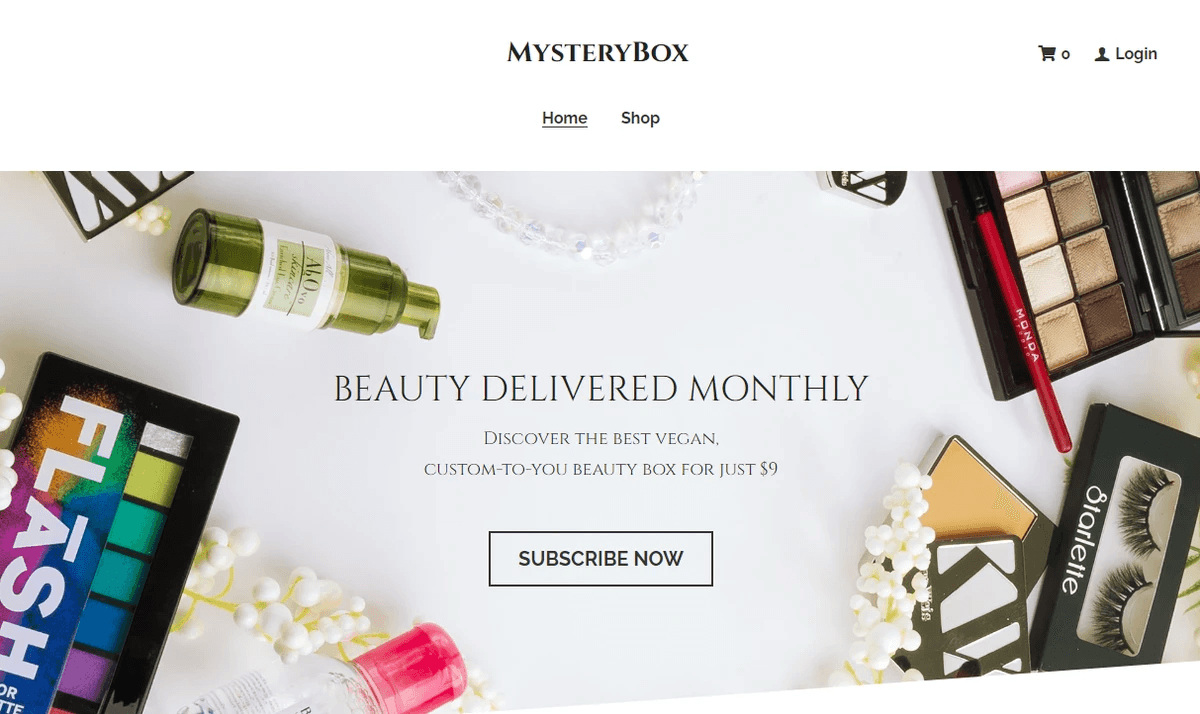
Mystery Box Template from Strikingly
Aligning website messaging with customer needs means arranging information around the visitor's decision, not the company's organization chart. The homepage should quickly state fit and value. Service pages can explain the mechanism and boundaries. Case studies can prove the result under realistic conditions. The compelling homepage guide links audience understanding, value proposition, benefits, proof, and action for this reason.
Create a message chain for each page: customer situation, desired progress, relevant strength, proof, and next step. Aligning website messaging with customer needs keeps the sequence intact. The Strikingly guide to website messaging refinement likewise emphasizes audience understanding and a clear promise. Do not present a capability or proof before explaining why it matters.
Read the page for tradeoffs as well as benefits. A collaborative service may require more participation, a custom product may take longer, and a specialist may cover fewer cases. Aligning website messaging with customer needs includes stating relevant tradeoffs rather than disguising real operating choices.
The replacement test: Remove the company name from the page and imagine placing a competitor's logo above the copy. If every sentence still works, aligning website messaging with customer needs has not yet captured a distinctive method, boundary, point of view, or proof.
Use Strikingly's section editing tools to change the order until visitor questions receive timely answers. Business website positioning should influence hierarchy: fit before detail, outcome before capability, evidence beside claims, and an appropriate next action after enough confidence exist
Use strengthening competitive differentiation against real alternatives
Competitors are not limited to businesses selling the same service. A buyer may delay, handle the work internally, use software, choose a cheaper substitute, or keep the current problem. Strengthening competitive differentiation begins by listing these real alternatives and the conditions under which each one is sensible.
Compare buying criteria rather than mocking another provider. A boutique studio may win on senior access, while a large agency may win on capacity. Highlighting distinctive business strengths can explain the former without denying the latter's value. Honest contrast makes Business website positioning more durable.
Build a comparison around criteria customers mention: scope, involvement, turnaround, specialization, price, support, or risk. Strengthening competitive differentiation reduces ambiguity when it explains meaningful tradeoffs. Strengthening competitive differentiation loses trust when an invented chart awards the business every category.
Visual treatment should reinforce the position without carrying it alone. Strikingly's template style controls coordinate fonts, colors, buttons, backgrounds, and navigation. Select choices that support the expected experience, then keep the message specific. Strengthening competitive differentiation still depends on a meaningful reason to choose, not a louder color.
Test whether the position improves recognition and fit
Show a key page to priority customers for ten seconds. Ask who the business serves, what outcome it supports, what feels different, and what they would do next. Business website positioning succeeds when people describe the intended situation and value without repeating the headline word for word.
Invite current customers to explain why they chose the business and which claim they can confirm from experience. A focused Strikingly Custom Form can collect selectable reasons and open comments. Highlighting distinctive business strengths is validated when customer language points to the same advantages the site emphasizes.
Use built-in analytics to compare visits and engagement on the pages that express the position. Track qualified inquiries, project fit, sales objections, win reasons, and wrong-fit requests outside the website as well. Business website positioning can reduce raw inquiry volume while improving relevance, so conversion rate alone is not a complete measure.
Run one positioning change at a time. Defining a clear market niche may change examples and navigation. Aligning website messaging with customer needs may change the headline and page order. Strengthening competitive differentiation may introduce a comparison or evidence block. Keeping the hypothesis visible makes the result easier to interpret.
Keep a Business website positioning record for future pages
Document the best-fit situation, wrong-fit boundary, desired outcome, important buying criteria, sustainable strengths, evidence, alternatives, and approved message hierarchy. Defining a clear market niche keeps new pages focused. Highlighting distinctive business strengths keeps claims defensible. Aligning website messaging with customer needs keeps language relevant, and strengthening competitive differentiation keeps the reason to choose visible.
Review the record when the market, offer, or customer evidence changes, not whenever a competitor publishes a new slogan. Together, defining a clear market niche, highlighting distinctive business strengths, aligning website messaging with customer needs, and strengthening competitive differentiation keep the record useful during future changes. Business website positioning improves through sharper choices and stronger proof. Defining a clear market niche gives those choices a boundary, while highlighting distinctive business strengths gives the website something real to say inside it.
