Business Website Messaging Becomes Clearer When Every Page Makes One Promise
Business Website Messaging Becomes Clearer When Every Page Makes One Promise

Visitors should not need a meeting to understand a website. Strong business website messaging identifies the offer, audience, customer change, and sensible next step. It sounds specific because it comes from real work rather than polished generalities.
In business website messaging, the editing challenge has four connected parts: writing clearer service descriptions, simplifying complicated business concepts, highlighting customer-focused outcomes, and creating consistent page headlines. Treat them as one message system. A strong headline cannot rescue an unclear service, and a useful outcome loses force when every page describes the company differently.
Collect the language customers already use
Before rewriting, gather the words people use in sales calls, inquiry forms, support messages, reviews, and project notes. Mark the problem they describe, the result they want, the terms they understand, and the points that repeatedly require explanation. Business website messaging becomes clearer when it reflects this evidence instead of an internal presentation deck.
Separate customer language from company language. “We need approvals to stop delaying launches” is customer language. “Cross-functional workflow enablement” is company language. Simplifying complicated business concepts often begins by choosing the first version, then introducing the necessary technical term only after the idea is understood.
Create a terminology ledger with the preferred customer phrase, internal term, plain definition, and relevant pages. This keeps business website messaging from drifting between editors. Simplifying complicated business concepts becomes repeatable because writers introduce specialist language consistently.
A five-line message brief
- Name the audience or situation the page is for.
- State the problem in language a customer would recognize.
- Describe the service without relying on its branded name.
- Name one realistic outcome and the mechanism that supports it.
- Define the next step and what happens after it is taken.
Use the brief before creating consistent page headlines or adding another page. It gives writing clearer service descriptions a factual base and keeps highlighting customer-focused outcomes connected to what the team can actually deliver. Strikingly's guide to homepage messaging similarly frames clarity around the offer, audience, benefit, proof, and next step.
Turn a service label into a useful explanation
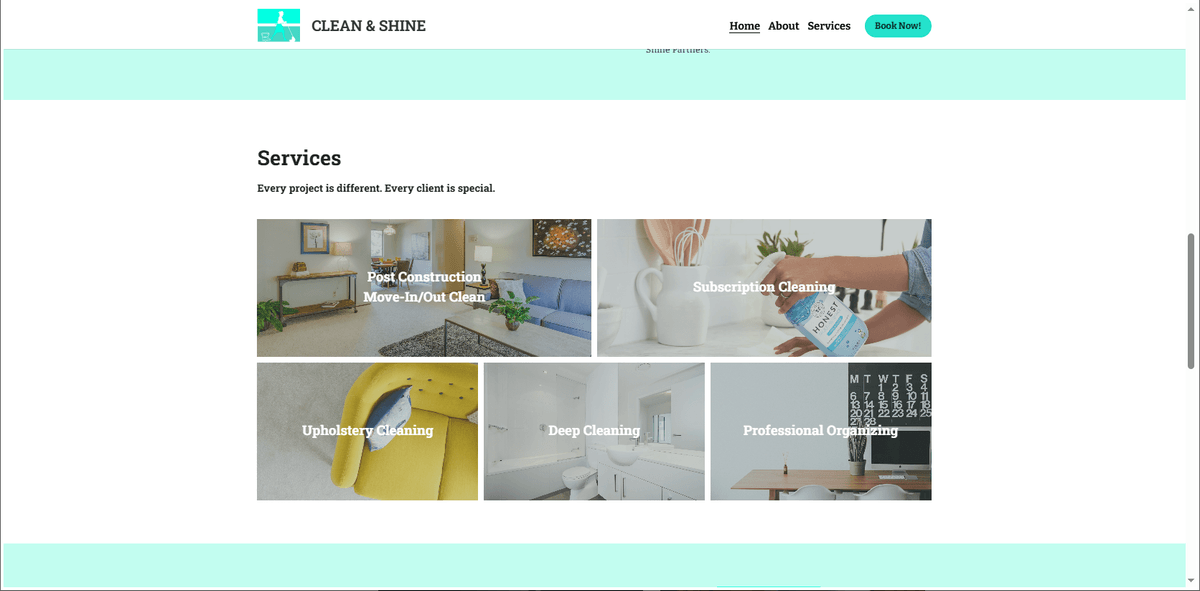
Clean & Shine Template from Strikingly
A service name is not a description. “Transformation consulting,” “growth solutions,” and “managed support” may be valid categories, but they do not tell a visitor what the work includes. Writing clearer service descriptions means explaining the starting situation, important activities, tangible deliverables, customer responsibility, and practical boundary.
Before: We provide tailored operational solutions for ambitious organizations.
After: We map your order-to-delivery process, identify repeated handoff delays, and give your operations team a 90-day improvement plan with named owners.
The stronger version can be evaluated. It supports writing clearer service descriptions because a visitor can see what is done and what is produced. It also supports highlighting customer-focused outcomes without claiming that every client will achieve the same percentage improvement.
Organize a service page around buying questions: Is this for my situation? What is included? What will I receive? What must my team provide? How long might it take? What happens next? The Strikingly article on service presentation connects process, benefits, examples, and inquiry design. Use that sequence when writing clearer service descriptions instead of listing capabilities in the order the company developed them.
Define exclusions where they prevent a poor-fit inquiry. Writing clearer service descriptions may include geography, project size, timing, platforms, or work the team does not perform. Honest boundaries strengthen business website messaging because qualified visitors can decide faster and everyone else can avoid an unproductive form submission.
Ask someone outside the delivery team to explain the service after one reading. Revise the passage responsible for any misunderstanding. The Strikingly guide to service website optimization also recommends testing whether readers understand the service, value, and next step. Business website messaging improves when observed confusion guides the edit.
Translate complexity in three passes
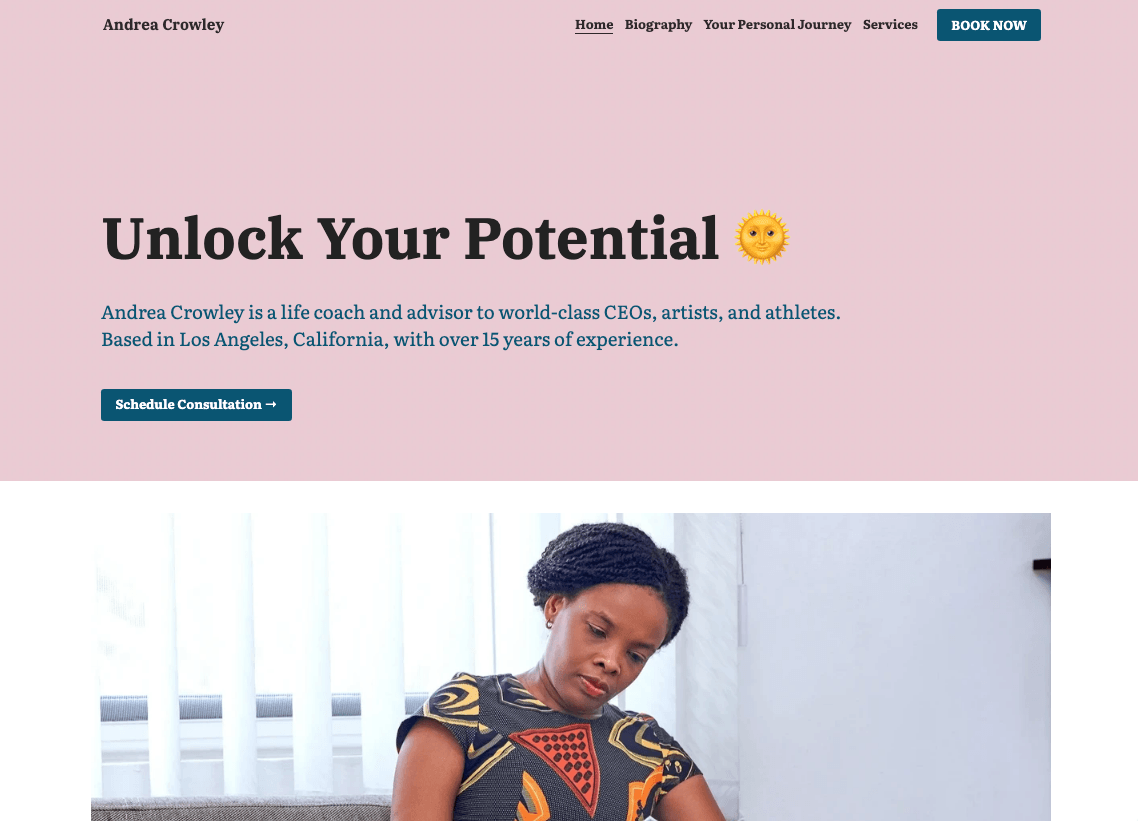
Andrea Template from Strikingly
Simplifying complicated business concepts does not mean removing important detail. It means controlling the order in which detail appears. First state the idea in everyday language. Then show a concrete example. Finally introduce the technical term, condition, or exception for readers who need precision.
Plain idea: Your reports should show which work is waiting and who can move it.
Concrete example: A delayed customer request appears with its current owner, next approval, and time waiting.
Precise term: This is a role-based workflow dashboard with aging and dependency indicators.
This sequence supports simplifying complicated business concepts because readers can build understanding before meeting specialist vocabulary. It also keeps business website messaging useful for buyers, technical reviewers, and existing customers without forcing all three audiences through the same level of detail.
Use analogies carefully. Compare only the part that truly behaves alike, then state where the comparison ends. Simplifying complicated business concepts fails when a friendly metaphor hides cost, risk, or customer responsibility. Add an FAQ, glossary, diagram, or linked guide when the detail matters but would interrupt the main explanation.
Strikingly's article on website content structure recommends ordering sections around visitor questions. That principle helps simplifying complicated business concepts because definitions, proof, limitations, and action can each appear when the reader needs them rather than in one dense opening.
Show the customer change and the reason to believe it

Eric Lambert Template from Strikingly
Highlighting customer-focused outcomes shifts emphasis from what the company does to what becomes easier, faster, safer, clearer, or more reliable for the customer. “Weekly reporting” is a feature. “See stalled decisions before they delay delivery” is an outcome. The strongest business website messaging connects both so the promise has a visible mechanism.
Use outcomes with defensible boundaries. State the customer situation, change, timeframe, and evidence source when a metric appears. Highlighting customer-focused outcomes should not turn one exceptional result into a universal guarantee. Strikingly's guide to digital service marketing similarly recommends pairing measurable outcomes with plain-language benefits and examples.
When highlighting customer-focused outcomes, place proof near the outcome it supports. A process result belongs beside the process claim; a response-time review belongs beside support messaging. Highlighting customer-focused outcomes becomes credible when a quotation, case note, screenshot, credential, or documented measure answers the visitor's immediate doubt.
Review outcome language with delivery staff. They know which claims need conditions and which benefits customers mention without prompting. Highlighting customer-focused outcomes becomes part of writing clearer service descriptions when the page explains how the work creates the stated change instead of placing benefits in a separate promotional block.
Make headlines behave like one family
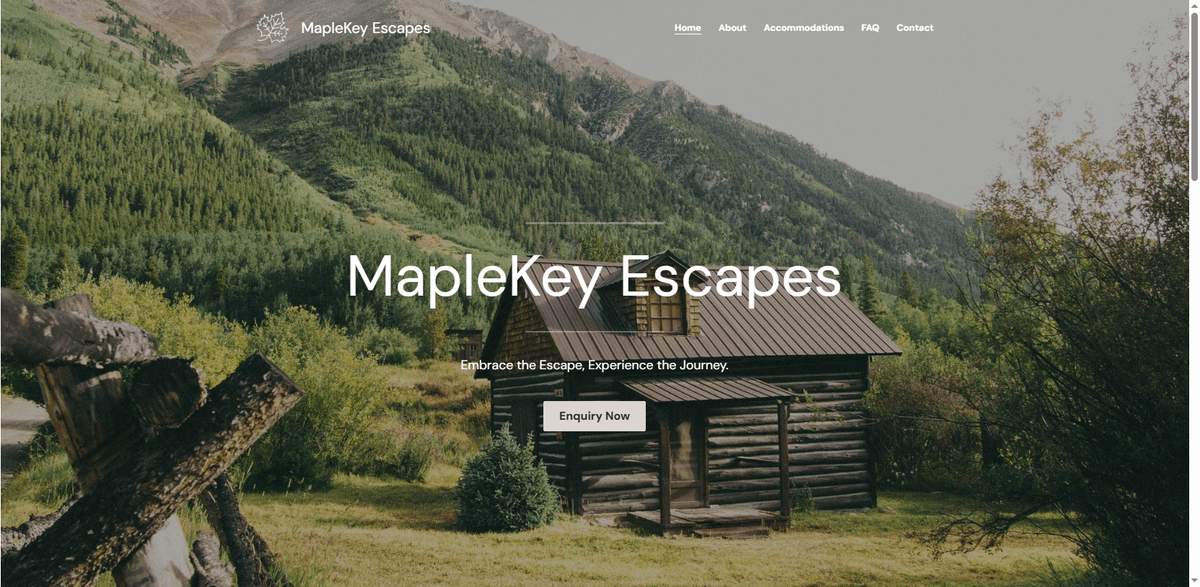
MapleKey Escapes Template from Strikingly
Creating consistent page headlines does not mean repeating one formula. It means using the same decision logic across the site. A homepage headline introduces the overall value; a service headline names a specific change; a case study headline identifies the customer situation and result; a contact headline sets an expectation for the conversation.
Choose a stable voice. If the homepage says “Build a reporting rhythm your team can maintain,” a service page titled “Next-Generation Synergy Solutions” feels unrelated. Creating consistent page headlines requires shared vocabulary for the audience, problem, outcome, and action. The tone can vary slightly by page job without changing the company's meaning.
Read only the H1 and H2 headings from every priority page. Together they should form a compact explanation of the business. Creating consistent page headlines also improves scanning because each heading carries an answer instead of announcing a generic topic such as “What We Do” or “Our Approach.”
Keep a headline inventory with each page's role, audience, promise, and primary verb. Creating consistent page headlines becomes easier when duplicate promises and conflicting terms are visible. The inventory helps business website messaging preserve one identity while each page answers a different question.
Use Strikingly's section management tools to arrange the final message after its logic is clear. For search previews, the guide to SEO page titles and meta descriptions helps keep the external promise aligned with the page. Creating consistent page headlines should continue from the search result through the first screen.
Test whether the message survives the next step
A contact form reveals whether the page has done enough explanatory work. If every prospect must ask what the service includes, business website messaging has postponed the essential answer. If the form receives many poor-fit requests, writing clearer service descriptions or highlighting customer-focused outcomes may need better boundaries.
Use a Custom Form only for information needed to provide the next useful response. Repeat the same service names used on the page, explain response timing, and avoid introducing new terminology at submission. Simplifying complicated business concepts should continue through labels, validation messages, and confirmation copy.
After publishing, compare repeated questions, qualified inquiries, page exits, and form starts. Built-in Analytics can show page activity and sources, while Google Analytics 4 can support deeper behavior review. Creating consistent page headlines is working when visitors retain the same understanding as they move between pages.
Run the message brief on one revenue-critical page each month. Practice writing clearer service descriptions with delivery evidence, simplifying complicated business concepts in layered language, and highlighting customer-focused outcomes beside credible proof. Creating consistent page headlines then becomes the visible result of a consistent underlying message.
Good business website messaging makes the company easier to evaluate without making it sound simplistic. Writing clearer service descriptions explains the work. Simplifying complicated business concepts controls the order of detail. Highlighting customer-focused outcomes shows why the work matters, and creating consistent page headlines keeps that meaning recognizable wherever a visitor enters.
