Build Website Referral Marketing Around a Clear Customer Handoff
Build Website Referral Marketing Around a Clear Customer Handoff

A satisfied customer may already want to recommend a business, but goodwill alone does not complete the introduction. They need a simple way to explain the service, the referred person needs a relevant place to arrive, and the business needs to recognize what happened. Website referral marketing connects those moments into one traceable handoff.
Strong website referral marketing programs do not begin with a large reward. They begin by encouraging customers to share services without asking them to compose a sales pitch. Creating referral landing pages gives the recipient context in the customer's absence. Highlighting customer referral benefits explains why participation is worthwhile, while tracking referral-generated inquiries shows whether the relationship produced useful opportunities.
Design the handoff before choosing the incentive
Encouraging customers to share services should begin at a credible referral moment. A consultant might ask after a successful launch, a cleaning company after a positive follow-up, or a tutor when a parent reports progress. Website referral marketing feels natural when the request follows evidence of value. Asking every contact immediately can make a relationship feel harvested rather than appreciated.
The four-part referral handoff
- Invitation: The customer receives a specific reason and an easy sharing method.
- Introduction: The referred visitor sees who the service helps, what happens next, and why the recommendation matters.
- Identification: For tracking referral-generated inquiries, the record carries a link, code, source field, or referrer name.
- Recognition: Highlighting customer referral benefits includes fulfilling every promised benefit consistently.
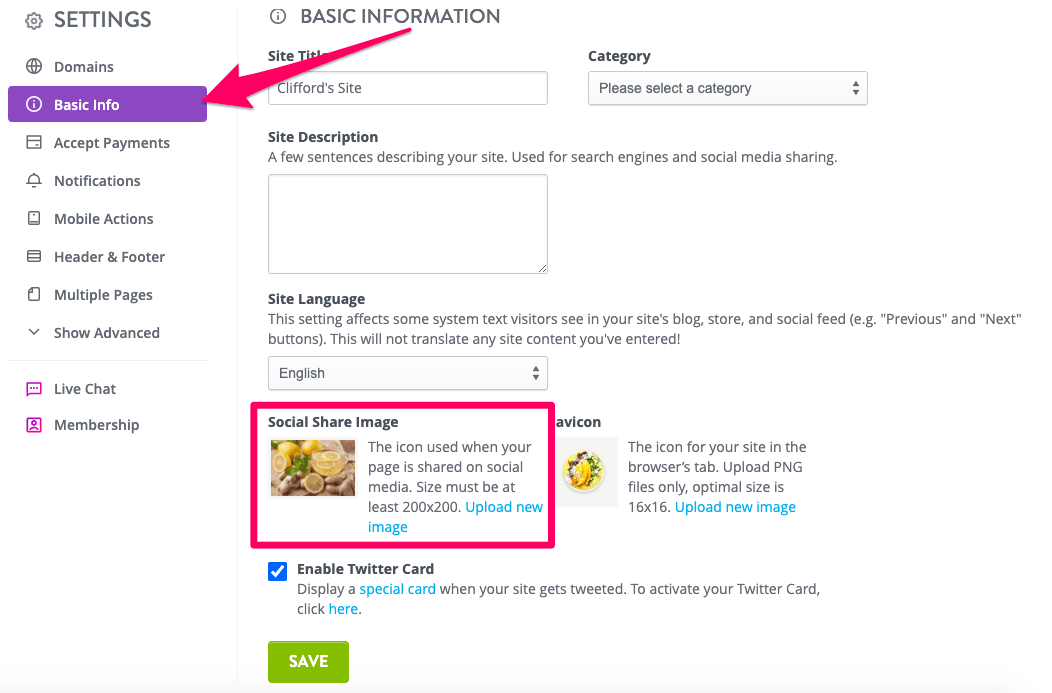
Strikingly Social Share Image Setting
This chain keeps encouraging customers to share services separate from pressuring them to close a sale. Give customers one approved sentence, a short link, and an optional image. The Strikingly guide to building presence through referral marketing discusses social sharing, incentives, and consistency, while its newer referral marketing guide connects landing pages, calls to action, forms, and promotion.
Encouraging customers to share services works best when the invitation sounds like help: “If someone in your team is facing the same issue, this page explains the process.” That wording protects trust because the customer can recommend a useful resource rather than repeat a claim they cannot prove. Website referral marketing should make personal judgment easier, not replace it.
A recognizable preview reduces uncertainty when a customer sends the link in a message or social post. Strikingly's Social Share Image guide explains how to set that preview. Pair it with a plain site description and test the live link on the channels customers actually use. Encouraging customers to share services becomes easier when the link looks legitimate before anyone opens it.
Give the referred visitor a page with one job

Macro Landing Page Template from Strikingly
A referral page is not a duplicate homepage. The visitor arrives with borrowed trust but incomplete context. Creating referral landing pages means answering five questions quickly: who recommended this, who is the service for, what outcome is realistic, what proof supports it, and what is the next low-risk action?
Keep the recommendation visible without exposing private details. A general headline such as “Recommended by a client or partner?” can be followed by the relevant service, a concise process, one strong result, and a focused inquiry route. Creating referral landing pages this way acknowledges the introduction while allowing the visitor to decide independently.
Website referral marketing may require several entry pages when services or audiences differ. A legal firm should not send every introduction to one generic page if business owners and families need different explanations. Strikingly's Multi-Page Site guide covers adding and duplicating pages. Creating referral landing pages from a controlled base layout helps preserve typography, proof standards, and inquiry expectations while changing the offer.
Creating referral landing pages also requires a clean mobile test. Open the exact shared URL on a phone, confirm that the recommendation context appears early, and complete the form with no prior knowledge. Website referral marketing loses momentum when a visitor must search the main navigation to discover the service that was recommended.
Explain the benefit without turning trust into a transaction
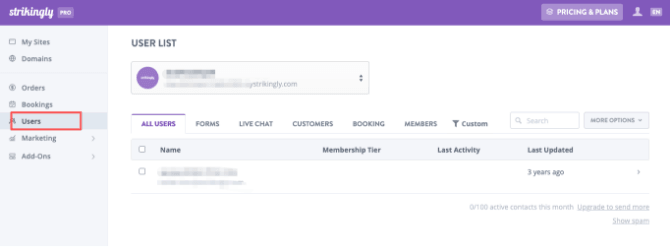
Strikingly Users List Dashboard
Highlighting customer referral benefits can include account credit, a service upgrade, a useful resource, charitable support, or recognition. When encouraging customers to share services, choose a benefit that fits the relationship and the value of a qualified introduction. A high reward for a sensitive professional service may feel uncomfortable; a modest thank-you after a successful engagement may feel proportionate.
When creating referral landing pages, state eligibility, timing, limits, exclusions, and delivery method before asking anyone to participate. Highlighting customer referral benefits is not just promotional copy; it is a small policy. If both parties receive something, explain each side separately. If only completed purchases qualify, do not imply that every submission earns a reward.
Strikingly's Affiliate Program FAQ is a useful example of making link use, qualification, and commissions explicit, although a business must write terms for its own program. Highlighting customer referral benefits should follow the same principle of visible conditions. Website referral marketing depends on customers trusting the promise after the introduction, not only before it.
Copy to prepare before launch
- A one-sentence invitation for encouraging customers to share services after a successful moment.
- A share message customers can personalize rather than a script they must repeat.
- Copy for highlighting customer referral benefits by naming who receives what, when, and how.
- A privacy note explaining how referrer details and referred inquiries will be handled.
- A confirmation message that sets a realistic response time for the new inquiry.
This preparation keeps highlighting customer referral benefits consistent across emails, pages, and conversations. It also supports encouraging customers to share services because staff no longer improvise the offer. When creating referral landing pages, publish complete terms at a stable link, then point shorter invitations to them.
Preserve the source from click to conversation
Tracking referral-generated inquiries begins with an identification method the team can maintain. Options include a unique referral link from a dedicated platform, a campaign URL, a referral code, or a required form question. For a small manual program, “Who referred you?” may be enough if names are normalized and staff review uncertain matches.
Do not depend on one signal. A visitor may forward a page, switch devices, reject analytics storage, or call instead of submitting the form. Tracking referral-generated inquiries is more reliable when the page path, campaign parameter, stated referrer, and staff notes can corroborate one another. Strikingly's Custom Form guide can help collect a code or referrer name, and the guide to viewing form responses explains how submissions are separated by form labels.
Create a shared status vocabulary: received, verified, qualified, booked, won, lost, and benefit fulfilled. Tracking referral-generated inquiries then follows business outcomes rather than raw leads. The Strikingly guide to managing users describes filtering and source information, while exporting form responses supports a controlled review outside the dashboard.
Assign one owner to resolve duplicates and fulfillment questions. Tracking referral-generated inquiries becomes unreliable when sales, marketing, and operations keep separate versions of the same introduction. Website referral marketing needs one record that links the referrer, referred contact, qualifying action, result, and promised recognition without collecting unnecessary personal information.
Review referral quality, not just referral volume
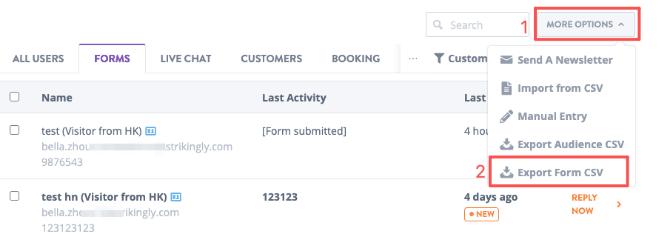
Strikingly Form CSV Export Control
A monthly review should compare visits, inquiries, qualified conversations, completed sales, response time, benefit cost, and disputed attributions. It should also test whether highlighting customer referral benefits produces confusion or useful participation. Strikingly Built-in Analytics can show page activity, while Google Analytics 4 supports deeper path analysis. Tracking referral-generated inquiries still requires the customer record because traffic reports cannot confirm every offline conversation or final qualification.
Read weak results by stage. If customers rarely share, revisit timing and the invitation. If referred visitors arrive but do not inquire, creating referral landing pages may need clearer relevance, proof, or expectations. If inquiries are plentiful but poor-fit, encouraging customers to share services needs a more precise description of the ideal customer. If rewards cause confusion, highlighting customer referral benefits needs simpler terms.
Test one part of the handoff at a time. Improve the share message, page headline, proof block, form question, or follow-up speed, then record the change. The guide to Google Analytics event tracking can support tracking referral-generated inquiries through important actions. Website referral marketing becomes more trustworthy when decisions reflect verified movement rather than anecdotal enthusiasm.
Launch one complete route before expanding
Choose one service, one satisfied customer group, and one referral moment. Write the invitation, prepare the share link, publish the focused arrival page, add the source field, define qualification, and document recognition. That narrow launch makes creating referral landing pages manageable and gives tracking referral-generated inquiries a clean baseline.
After ten to twenty introductions, review the language customers actually used, the questions referred visitors asked, and the disputes staff encountered. Use that evidence when encouraging customers to share services with another audience. Update the page before expanding the reward. Highlighting customer referral benefits should remain accurate as conditions change, and every participant should be able to understand the terms without asking for private clarification.
Website referral marketing succeeds when a personal recommendation remains personal while the website handles the practical work. Creating referral landing pages supplies context. Tracking referral-generated inquiries protects attribution. Encouraging customers to share services becomes comfortable because the message is useful, and highlighting customer referral benefits becomes credible because the promise is specific. Build one complete handoff, observe it carefully, and improve the point where real people hesitate.
