Build a Digital Sales Funnel Around Real Visitor Routes
Build a Digital Sales Funnel Around Real Visitor Routes

A digital sales funnel is easier to improve when it is drawn as a set of real visitor routes rather than a neat triangle. One person may arrive from a problem-focused search, another from a comparison ad, and a third from an email sent after an earlier visit. A digital sales funnel should not give them the same introduction, proof, or next action.
The practical work therefore includes creating targeted entry pages for distinct promises, supporting visitors through consideration stages with useful evidence, addressing objections before purchase near the moment of doubt, and measuring movement between funnel stages as connected actions. Those four jobs turn a diagram into a website experience a visitor can actually follow.
Follow three visitors instead of one ideal customer
Start with three plausible arrivals and give each person a task. This keeps a digital sales funnel grounded in behavior. Strikingly's guide to digital marketing funnels describes awareness, consideration, and decision as stages requiring different content. The website still needs to translate those stages into specific pages and handoffs.
The cold search visitor
- Arrival: A problem-focused search brings this person to an article. Creating targeted entry pages can make that article a strong entrance, with a clear explanation, relevant example, and solution link. Supporting visitors through consideration stages begins with a useful comparison or implementation guide instead of an immediate “buy now.”
- Next useful move: A checklist or service overview can earn the next click. Addressing objections before purchase is premature unless a concern blocks learning. Measuring movement between funnel stages should record progress to a higher-intent page, not treat reading time as a sale.
The comparison visitor
- Arrival: A campaign promising an easier alternative leads to a focused page. Creating targeted entry pages requires continuity between the ad and page. Supporting visitors through consideration stages means showing differences, constraints, outcomes, and pricing logic. The Strikingly landing page experience guide recommends a focused message, strong call to action, trust indicators, and simple form.
- Next useful move: A case study, comparison, or consultation can match readiness. Addressing objections before purchase should cover offer-specific risks, while measuring movement between funnel stages connects the campaign click, comparison interaction, and qualified action.
The returning prospect
- Arrival: An email or saved link returns this person to pricing, a product, or booking page. A digital sales funnel should let them skip familiar material. Creating targeted entry pages can send them to the relevant offer rather than the homepage. Supporting visitors through consideration stages now means preserving context and making details verifiable.
- Next useful move: Addressing objections before purchase may require delivery terms, cancellation rules, support access, or one final answer. Measuring movement between funnel stages should distinguish this return because a shorter route may signal confidence.
Give every entry page one arrival promise

Beauty Box Template from Strikingly
Creating targeted entry pages starts by writing down the exact promise that produced the click. A search result may promise instructions, an advertisement may promise a particular offer, and a partner link may promise an audience-specific solution. Repeat that promise in the headline, then answer who the page is for, what changes, and what happens next.
A digital sales funnel becomes confusing when every source reaches a generic homepage. The homepage can route broad demand, but focused traffic deserves focused context. Strikingly's guide to landing page optimization connects traffic intent with page action. When creating targeted entry pages, use a relevant template and remove sections that do not serve the arrival promise.
Creating targeted entry pages does not require dozens of near-duplicates. Group traffic when audience, promise, evidence, and action are the same. Split a page when one group needs different proof or commitment. A first-time buyer may need samples and a guide; an existing customer may need a direct upgrade path.
Build consideration as a bridge, not a waiting room

Novaro Template from Strikingly
Supporting visitors through consideration stages means helping them resolve a choice. When supporting visitors through consideration stages, pages should answer questions such as “Is this suitable for my situation?”, “How is it different?”, and “What evidence supports the claim?” A digital sales funnel should not bury these answers in unrelated blog posts or make a visitor request a sales call for basic facts.
For supporting visitors through consideration stages, choose content by decision difficulty. A simple product may need specifications, reviews, and shipping details. A complex service may need a process, case study, scope boundaries, and consultation expectations. Strikingly's Product Reviews can add buyer evidence, while a Custom Form can collect details for a useful service conversation.
Supporting visitors through consideration stages also requires linking evidence to the claim it proves. Put an outcome beside the benefit, a review beside the product, and process details beside the inquiry action. Creating targeted entry pages establishes relevance; the consideration bridge then adds depth without changing the original promise.
Answer doubts where commitment increases
Addressing objections before purchase begins with evidence, not reassurance slogans. Review sales calls, support messages, form questions, product returns, and abandoned conversations. Sort objections into fit, price, timing, trust, effort, and risk. Then place each answer at the point where that concern becomes relevant.
For a service, addressing objections before purchase may mean explaining the first meeting, likely timeline, price range, deliverables, and cancellation terms. For a store, it may mean product fit, availability, shipping, returns, payment methods, and data security. The Strikingly article on customer journey optimization similarly highlights transparent pricing, privacy policies, and accessible support as confidence builders.
When addressing objections before purchase, do not move every answer into a giant FAQ. Shipping belongs near checkout, service scope near the package, and data guidance beside the form. A focused FAQ can collect secondary concerns, but addressing objections before purchase works best when the answer arrives before a search is necessary.
Use Strikingly Live Chat when a timely human answer can rescue a high-intent session. Use a clear contact or signup form when the response can wait. Supporting visitors through consideration stages should offer assistance without making contact the only way to understand the offer.
Measure the handoffs that reveal progress
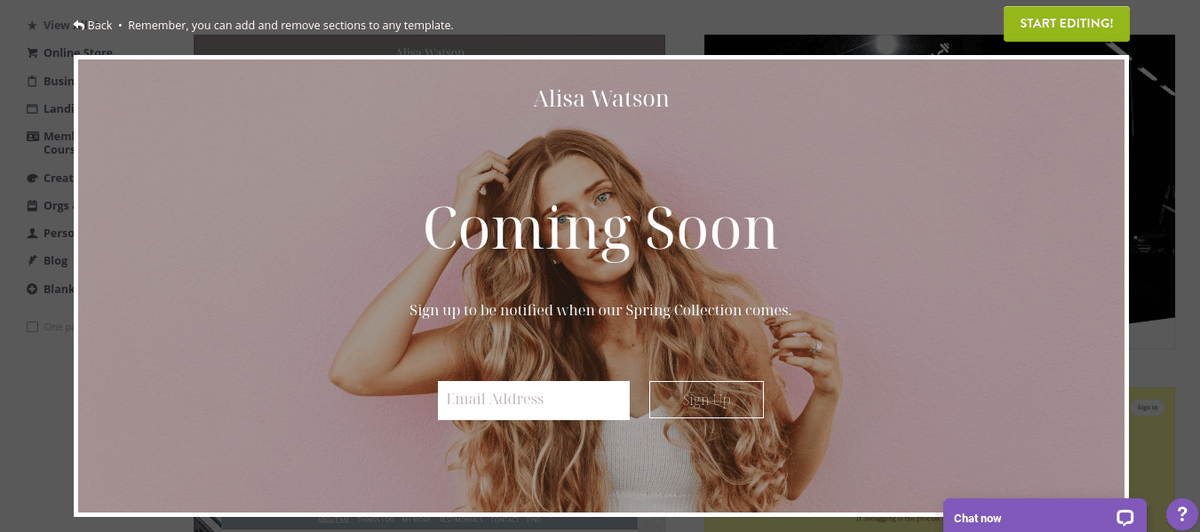
Strikingly Landing Page Template Preview
Measuring movement between funnel stages requires an event sequence. For measuring movement between funnel stages, totals such as visits, clicks, and submissions are useful but cannot explain whether the same qualified visitor advanced. Define a small chain for each route: entry-page view, evidence interaction, high-intent page view, action start, successful completion, and confirmation.
A digital sales funnel needs both transition rates and context. If many people read a guide but few reach the service page, check the relevance of the bridge. If people reach pricing but do not start the form, check fit, proof, and commitment. If they start but do not finish, inspect form effort and error handling. Strikingly's built-in analytics provides traffic sources and top-page information, while Google Analytics 4 integration supports more granular reporting.
A useful transition review for measuring movement between funnel stages
- Name the visitor route and the promise at its entrance.
- Define one observable action that signals genuine consideration.
- Record the next high-intent action and successful completion separately.
- Segment results by source, device, and new versus returning visitor.
- Read questions and objections alongside the numbers before changing the page.
For measuring movement between funnel stages, agree on what progress means before opening a report. A download may matter on an educational route but be unnecessary on a direct purchase route. Supporting visitors through consideration stages should create observable progress without inventing clicks solely for measurement.
Run a two-week route repair

Andy Smith Template from Strikingly
A digital sales funnel review begins with one route that has enough qualified traffic to learn from. Document the source promise, page sequence, key questions, and current transitions. Creating targeted entry pages may be the priority when the first page mismatches the click. Addressing objections before purchase may be the priority when people reach the decision page but stop there.
Make one coherent change in the second week. This could be a more relevant entry headline, a comparison block, proof beside the CTA, clearer form expectations, or a shorter checkout explanation. The Strikingly guide to building a website conversion funnel with fewer detours is a useful reminder that every page and action should earn its place.
After the test, measuring movement between funnel stages should compare the same route and segment before and after the change. For measuring movement between funnel stages fairly, keep the event definitions and attribution window stable. Look for downstream quality as well as clicks. A stronger entry page that attracts unsuitable inquiries has not improved the digital sales funnel; a lower click rate that produces better-fit conversations may still be a gain.
Make the next decision easier to complete
A useful digital sales funnel does not push every person through the same sequence. It recognizes the context carried by each arrival and provides the right amount of clarity. Creating targeted entry pages keeps the first promise intact. Supporting visitors through consideration stages gives comparison and proof a clear purpose.
Addressing objections before purchase protects confidence when commitment rises, and measuring movement between funnel stages reveals which handoff deserves attention next. Review one real route, fix its weakest transition, and confirm whether qualified visitors reach a better outcome. That repeated practice makes a digital sales funnel simpler for visitors and more informative for the business.
