A Website Content Refresh Keeps Strong Pages Useful Without Starting Over
A Website Content Refresh Keeps Strong Pages Useful Without Starting Over

Older pages may have earned links, answered customer questions, supported sales, or introduced the business to searchers for years. A website content refresh protects that foundation while correcting the parts that no longer represent the company, audience, or current offer.
The work is broader than changing a date. Updating outdated business information protects accuracy. Improving older pages with new insights makes the material more complete. Removing irrelevant website sections reduces distraction, while preserving valuable organic traffic keeps proven discovery paths visible. The goal is a more useful page, not a page that merely looks newly edited.
Give every page a refresh route before editing

Perspective Blog Template from Strikingly
A website content refresh begins with a decision, not a blank document. Inventory priority URLs and record each page's job, audience, offer, last meaningful update, organic visits, links, and owner. Strikingly's practical website content audit uses keep, update, merge, redirect, or remove logic because age alone does not reveal value.
Use Strikingly built-in analytics to find pages that receive attention, then add sales feedback, support questions, changed policies, and customer language. Updating outdated business information is urgent where a wrong fact could affect a purchase. Preserving valuable organic traffic deserves equal weight when a page has established visibility.
Four useful refresh routes
- Keep: accurate, useful, distinct, and serving a clear visitor need.
- Update: sound purpose, but facts, proof, examples, or next steps have aged.
- Merge: overlapping pages can become one complete destination with a relevant redirect.
- Remove: no current audience, business role, search value, useful links, or replacement.
Apply the route to pages and sections. A service page may keep three accurate sections, rewrite one claim, and remove one obsolete promotion. Improving older pages with new insights can coexist with removing irrelevant website sections when each choice follows the page's job. A focused website content refresh is safer than rewriting everything at once.
Correct facts in the order their errors create risk

Strikingly Drag and Drop Feature
Updating outdated business information starts with details that can mislead someone today: contact information, hours, service availability, pricing, shipping, product names, staff roles, policies, certifications, dates, and screenshots. The Strikingly website update guide recommends reviewing content, experience, SEO, and mobile behavior together so a correction does not leave an old link behind.
Rank inaccuracies by consequence. An old company-history sentence may wait; a retired service accepting inquiries cannot. Updating outdated business information on high-risk pages needs a source and owner so reviewers know which price list, policy, or product record is authoritative.
Strikingly allows you to edit a site after publishing. For a larger website content refresh, the Clone or Copy Site guide explains unpublished working copies. Preview factual and structural changes together; removing irrelevant website sections can affect page flow, while updating outdated business information can affect several navigation labels.
Accuracy includes the promise around a call to action. If a form now starts a different process, explain it near the button. If a guide mentions a discontinued option, link the current alternative. Updating outdated business information works when visitors can act confidently, not simply when every date is recent.
Add evidence the original page could not have known

Fresh Blog Template from Strikingly
Improving older pages with new insights means adding material that changes understanding: a clearer method, customer question, stronger example, implementation lesson, product development, or new evidence. Strikingly's website content optimization guide is useful because refresh work should improve related pages and search intent, not inflate one URL.
Begin with the gap between the page and today's reader. Improving older pages with new insights may replace a broad claim with a case result, add decision criteria, or explain a recurring exception. Keep original sections that still work, and add an update note when the topic is sensitive or time-dependent.
For blog content, use Strikingly's guide to editing an existing blog post and remember that saved edits still need to be published. The guide to optimizing blog posts for search engines emphasizes useful, relevant, readable, semantically complete content. Improving older pages with new insights should satisfy that reader-first standard before introducing more keywords.
A website content refresh should also improve connections. Link the refreshed page to current services, related guides, policies, or examples, and update older internal links that point toward weaker material. Preserving valuable organic traffic becomes easier when visitors and search engines can understand where the revised page belongs in the wider topic.
Remove sections only after tracing what they support
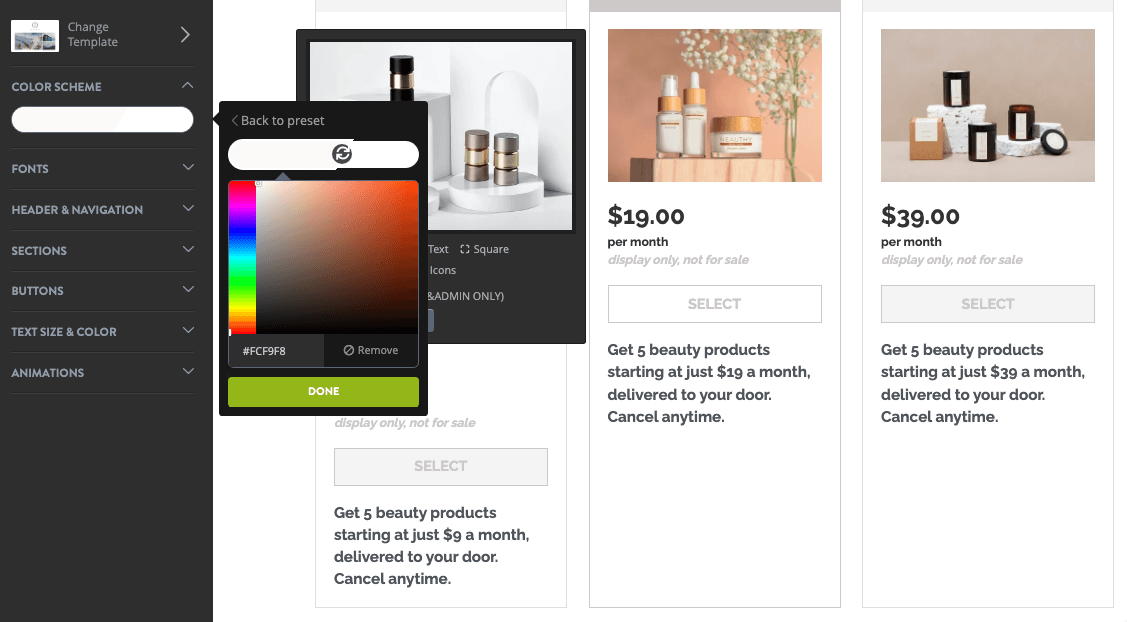
Strikingly Styles Feature
Removing irrelevant website sections begins with a dependency check. A dated section may still contain a service boundary, an internal link, sales proof, or details that prevent poor-fit inquiries. Mark its visitor job, incoming links, and best destination before deleting it.
Start with clearly harmful material: expired promotions presented as current, duplicated introductions, unavailable offers, abandoned feeds, broken embeds, empty galleries, and content for an audience the business no longer serves. Removing irrelevant website sections can shorten a page without weakening it when nearby transitions are repaired.
Where two sections compete, keep the stronger explanation and move unique proof into it. Where pages overlap, use the Strikingly content organization guide to group resources around visitor intent. Removing irrelevant website sections should leave a cleaner path, while improving older pages with new insights strengthens the retained destination.
Do not confuse low traffic with irrelevance. A policy, accessibility note, specialist service, or customer setup guide may serve a small but essential audience. Updating outdated business information may be the right choice for these pages even when they never become major traffic sources. A website content refresh balances reach, usefulness, risk, and business value.
Protect search value while changing the page
Preserving valuable organic traffic begins before publishing. Record the URL, title, search intent, organic landing traffic, important queries, links, and useful conversions. This baseline cannot guarantee rankings, but it shows what the page contributes and what the refresh must protect.
Keep the URL stable when the page still serves the same intent. Preserve the strongest explanations, headings, proof, and internal relationships instead of replacing the page with unrelated copy. Preserving valuable organic traffic is easier when the website content refresh changes one coherent layer at a time and reviewers can explain why each major revision was made.
If a page no longer deserves to exist, removing irrelevant website sections may not be enough. Decide whether useful material belongs elsewhere and whether the old URL needs a relevant redirect. The Strikingly article on website content migration recommends mapping valuable URLs and avoiding simultaneous changes to URL, intent, copy, design, and navigation without a strong reason.
Use Google Analytics 4 with Strikingly when you need deeper behavior reporting. If major pages change, the Strikingly guide to Google indexing and recrawling explains URL inspection and sitemap submission. Preserving valuable organic traffic requires monitoring impressions, visits, engagement, and qualified actions by page rather than judging total traffic alone.
A practical search-protection review
- Compare old and refreshed page promises.
- Confirm headings, links, media descriptions, and actions.
- Test the URL on desktop and mobile.
- Review search and business signals on schedule.
Improving older pages with new insights strengthens relevance only when new material serves the established question. Updating outdated business information should not erase accurate explanations. Removing irrelevant website sections should not erase necessary context. Preserving valuable organic traffic protects useful meaning without freezing every sentence forever.
Publish the refresh in a controlled sequence
A website content refresh is easier to evaluate in small releases. Start with high-risk corrections, then one topic cluster or journey. Use the Strikingly pre-publish checklist to review titles, image descriptions, links, section order, navigation, and mobile presentation. This staged approach supports preserving valuable organic traffic.
Give each release an owner, date, expected benefit, and review window. Updating outdated business information may require an immediate same-day check. Improving older pages with new insights may need several weeks of search and engagement data. Removing irrelevant website sections should be checked for broken journeys as soon as the page publishes.
Preserving valuable organic traffic also depends on patience. Search systems and visitors need time to respond, and a short fluctuation is not automatically a failure. Compare the page with its own baseline, check whether the intended audience still arrives, and ask whether inquiries, purchases, signups, or support outcomes remain useful.
Set the next review date immediately. Changing prices may need monthly ownership, an evergreen guide a six-month review, and a policy an event-triggered check. Updating outdated business information becomes routine when each source has an owner. Improving older pages with new insights becomes easier when new lessons have a documented home.
Keep what earned trust and improve what no longer does
A thoughtful website content refresh respects history and present needs. Updating outdated business information prevents action on old facts. Improving older pages with new insights gives existing authority more usefulness. Removing irrelevant website sections creates focus, and preserving valuable organic traffic protects earned discovery. Improving older pages with new insights also keeps that discovery worth revisiting.
Choose one established page this week. Document its job and baseline, assign a refresh route, and make the smallest changes that improve accuracy, relevance, or flow. Publish, monitor, and record what you learned. That website content refresh cycle improves the site without treating every aging page as a demolition project.
