A Business Website Strategy Turns Company Priorities Into Useful Page Decisions
A Business Website Strategy Turns Company Priorities Into Useful Page Decisions

A polished website can still leave the business unsure what to improve. A business website strategy connects a company priority to the visitor decisions, pages, and evidence that support it. The team gains a reason to maintain one page, simplify another, and decline an idea that does not serve the goal.
The practical work includes aligning website content with business goals before writing, prioritizing pages that influence sales before redesigning everything, creating clear paths between services so visitors can compare options, and measuring website contribution to growth without crediting the site for outcomes it cannot control. These activities turn the website from a collection of requests into a managed business asset.
Begin with a decision the business actually needs
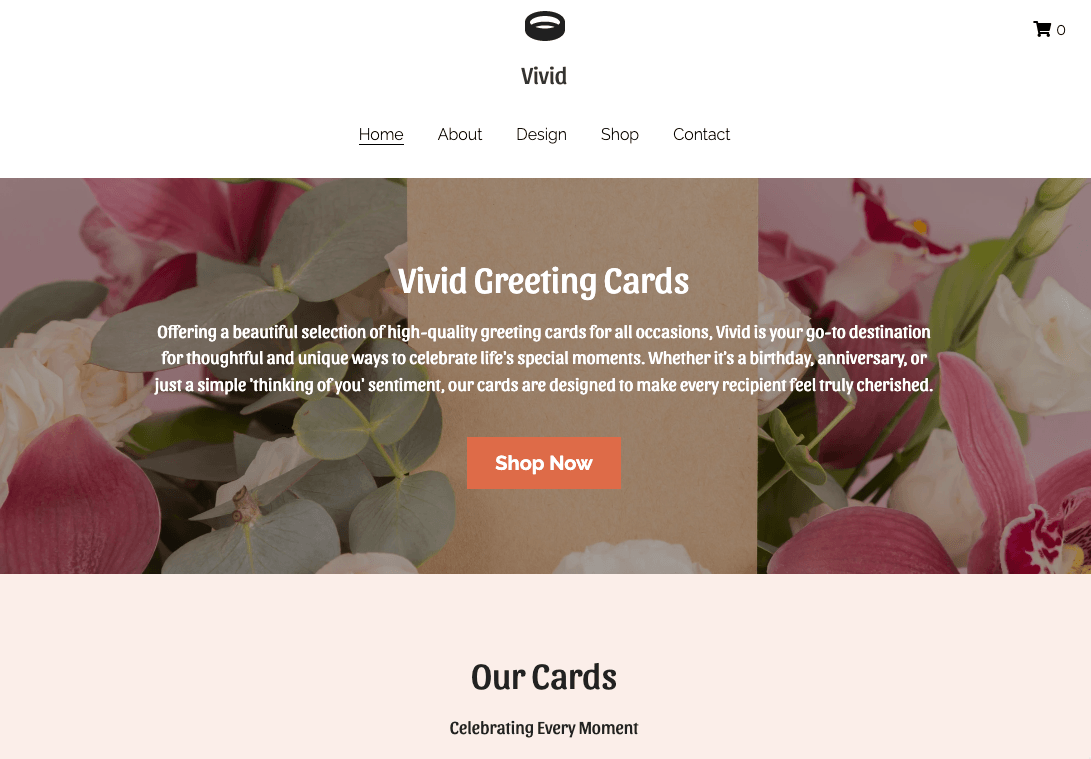
Vivid Template from Strikingly
A strong business website strategy begins with one company decision for the next quarter: improve inquiry quality, help customers choose a higher-value service, support a new market, or reduce routine support demand. The Strikingly guide to an impactful website strategy connects goals, audience, content, experience, SEO, analytics, and ongoing management because no single feature can carry the strategy.
Aligning website content with business goals translates an internal target into something a visitor can do. “Grow consulting revenue” may become a visitor task: recognize the right service, see evidence, understand the engagement, and request a focused conversation. The sales process, offer quality, price, and delivery still influence the result.
The one-page website strategy brief
- Business result: name one outcome and the time period in which it matters.
- Priority audience: describe the customer situation, not only a broad demographic.
- Visitor decision: state what the right person should understand, compare, or do.
- Page portfolio: identify the few pages that must support that decision together.
- Evidence: select a useful website signal and a downstream business result.
- Owner: assign the next change and a date for reviewing what happened.
Use the brief to challenge vague work. Aligning website content with business goals gives each article a reader need and destination. Prioritizing pages that influence sales can move a service comparison ahead of decoration. Creating clear paths between services shapes navigation, while measuring website contribution to growth takes the review beyond pageviews.
Build a page portfolio around the customer decision
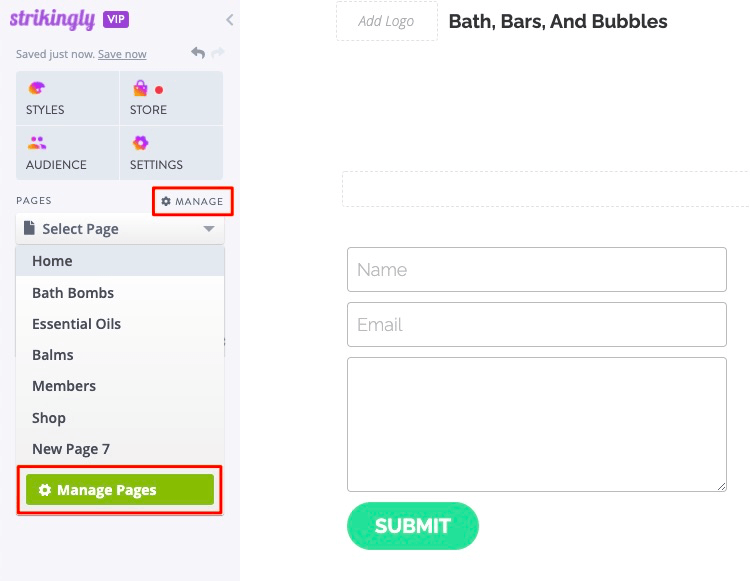
Strikingly Multi-Page Site Manager
A business website strategy should explain how pages work together. A service company's portfolio might include the homepage, a service overview, detailed service pages, a case study, an FAQ, and an inquiry form. Strikingly's checklist of must-have business website pages is a useful starting point, but the final selection must reflect real customer questions.
Aligning website content with business goals changes each page's job. The homepage may route qualified visitors, a service overview may support comparison, a case study may prove a result, and a resource may prepare someone who is not ready to inquire. Give every page one primary job and one sensible supporting action.
When the portfolio needs separate destinations, use Strikingly's multi-page site tools to create, reorder, hide, or duplicate pages. Creating clear paths between services becomes easier when an overview page introduces the choice and detailed pages answer different needs. If the site remains compact, sections and anchors can create a shorter route without inventing pages that have too little substance.
Creating clear paths between services requires customer language. “Strategy,” “Implementation,” and “Ongoing Support” usually communicate more than internal team names. State who each service fits, what result it supports, and what happens next so comparison does not require opening every page.
Choose the pages closest to useful revenue conversations

Autogoat Template from Strikingly
Prioritizing pages that influence sales means investing where visitor intent, business value, and an identifiable weakness overlap. A busy blog post may need a better bridge to a service. A lower-traffic service page may influence nearly every qualified inquiry, while a process page may remove the final uncertainty before contact.
A three-pass page investment sequence
- Protect: correct inaccurate offers, broken actions, weak mobile experiences, and outdated proof on critical pages.
- Strengthen: clarify value, comparison, evidence, and next steps on pages already involved in customer decisions.
- Expand: create new resources or landing pages only after the existing path can carry the added attention.
Prioritizing pages that influence sales needs evidence from sales calls, customer questions, search behavior, and analytics. The Strikingly article on business growth marketing treats pages as business jobs. Ask which page helps a visitor confirm fit or act, then use measuring website contribution to growth to check whether it performs that job.
A business website strategy should also protect pages that influence retention, referrals, and support. Prioritizing pages that influence sales is important, but an onboarding guide may reduce customer frustration and preserve future revenue. Aligning website content with business goals helps the team distinguish a current sales priority from the wider health of the customer experience.
Design service routes as connected conversations
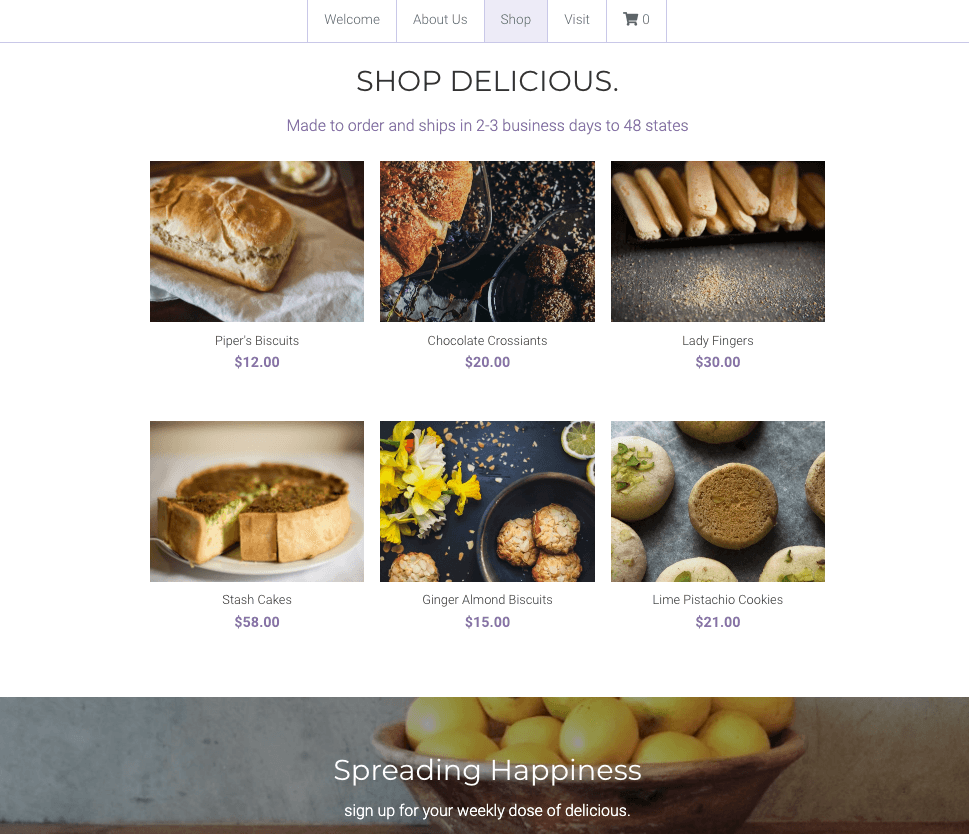
Minimal Website for Business Template from Strikingly
Creating clear paths between services begins before the menu. Map each customer situation to the relevant service, proof, explanation, and action. A first-time buyer may need an overview and case study; an existing customer may need an advanced service, booking page, or support resource. Each route should match what that visitor already knows.
Use plain links inside relevant copy, related-service blocks, and a restrained menu. Strikingly's Site Search can support larger sites, while a custom form can collect the information needed to route an inquiry. Creating clear paths between services means the form follows the visitor's choice instead of asking them to repeat the entire journey.
Prioritizing pages that influence sales often reveals missing handoffs. A service article may end without linking to the relevant offer. A broad services page may list five options but offer one generic “Learn More” button. Creating clear paths between services replaces that ambiguity with descriptive links, comparison cues, and next steps that preserve context.
Review the route on mobile and from external entry points. Someone arriving directly at a detailed service page still needs orientation: what this service solves, how it relates to other options, who it suits, and how to proceed. A business website strategy should not depend on everyone starting at the homepage.
Measure contribution without pretending the website acts alone
Measuring website contribution to growth starts with a chain of evidence: business goal, visitor behavior, page action, qualified outcome, and later result. For leads, the chain might be service-page visit, case-study view, inquiry, accepted sales conversation, and revenue. This makes a business website strategy easier to evaluate and keeps aligning website content with business goals tied to observable behavior.
Use Strikingly built-in analytics for traffic and page signals, and connect Google Analytics 4 when deeper event analysis is useful. Form responses can be reviewed through Strikingly contacts and exported with the form response export. Measuring website contribution to growth means pairing website behavior with a downstream quality check.
Do not reward a metric merely because it increased. Longer time can mean interest or confusion, and more inquiries can include poor-fit prospects. Measuring website contribution to growth requires an interpretation agreed upon in advance, plus a guardrail such as lead quality, support demand, refund rate, or customer feedback.
Aligning website content with business goals becomes visible in this chain. Prioritizing pages that influence sales becomes testable through qualified outcomes, and creating clear paths between services becomes measurable through route use and inquiry context. These signals keep the business website strategy accountable without claiming one button produced the sale.
Make the quarterly review a decision meeting
A quarterly business website strategy review should end with choices, not a long analytics presentation. Bring the brief, page portfolio, customer questions, sales feedback, and a small set of measures. Measuring website contribution to growth during this review should determine what to protect, strengthen, combine, or retire next.
Begin by checking whether the business priority changed. If it did, aligning website content with business goals may require a new page job or audience route. Next, assess whether prioritizing pages that influence sales produced better conversations, not simply more clicks. Then inspect whether creating clear paths between services reduced confusion. This is measuring website contribution to growth with operational evidence, not dashboard volume alone.
Use a Simple Blog and blog categories only where recurring questions deserve answers. Aligning website content with business goals keeps publishing connected to discovery, evaluation, or retention, while prioritizing pages that influence sales connects useful articles to the service decisions they prepare.
Finish by recording the assumption behind each change. Measuring website contribution to growth is easier when the team remembers what it expected and why. A business website strategy improves through accumulated learning: one service path clarified, one high-value page strengthened, one content gap answered, and one result reviewed honestly.
Leave with a smaller, sharper website agenda
A business website strategy is valuable because it improves decisions. Aligning website content with business goals gives each important page a reason to exist. Prioritizing pages that influence sales directs attention toward consequential moments. Creating clear paths between services preserves context, while measuring website contribution to growth shows where the site is genuinely helping.
For the next business website strategy cycle, choose one result, map the pages that support it, and identify the weakest handoff. Prioritizing pages that influence sales should produce one meaningful change, an owner, and a review date. This rhythm keeps the site responsive without turning every idea into another page.
